Wilson vs Babolat vs Head: Best Tennis Racket Brand?
Disclosure: RacketEdge is an Amazon Associate and earns from qualifying purchases.
The best tennis racket brand depends on your playstyle. Wilson is famous for classic headlight feel and control (Blade/Pro Staff). Babolat is the benchmark for easy baseline power and topspin (Pure Drive/Aero). Head is the leader in all-court versatility and comfort (Speed/Radical).
When shopping for a new racket, the sheer number of models is overwhelming. However, if you look at the professional tour or your local club, three manufacturers dominate the landscape: Wilson, Babolat, and Head. Together, they account for over 80% of performance racket sales globally.
Choosing between these three giants is not about finding which brand is "better." All three manufacture high-quality, professional-grade frames. Instead, it is about finding which brand’s design philosophy, signature feel, and technology lineup match your NTRP skill level, stroke path, and physical needs.
As a playtester and stringer who has worked with all three brands for over a decade, I spent hours analyzing their flagship lines. In this guide, we will break down the identity of Wilson, Babolat, and Head, compare their signature feels, and help you find the brand that belongs in your hand.
1. Frame Physics: Stiffness, Swingweight, and Balance
Before comparing the brands, we must understand the physics metrics that define how a racket plays. Racket designers manipulate three core variables:
- Stiffness (RA Rating): Measured on a scale from 50 (extremely flexible) to 70+ (extremely stiff). Flexible frames absorb energy and provide control; stiff frames return energy and provide power.
- Swingweight: Represents how heavy a racket feels when you swing it. A higher swingweight (320+ kg-cm²) offers stability against heavy shots, while a lower swingweight (<315 kg-cm²) offers maneuverability.
- Balance: Expressed in points Head-Light (HL) or Head-Heavy (HH). Control rackets are usually head-light, placing more weight in the handle to allow fast swings and touch at the net.
According to the United States Racquet Stringers Association (USRSA):
"A racket's performance is a delicate balance of frame stiffness and mass distribution. Stiffer frames transmit less energy loss to frame deformation, resulting in higher ball velocity, but require the player to possess clean mechanics to avoid joint strain."
2. Flagship Model Specifications Comparison
To see how these brands differ in engineering, let us compare their flagship "player's" models side-by-side.
| Specification Parameter | Wilson Blade 98 v9 (16x19) | Babolat Pure Aero 2023 | Head Speed MP 2024 |
|---|---|---|---|
| Head Size | 98 sq. in. / 632 sq. cm. | 100 sq. in. / 645 sq. cm. | 100 sq. in. / 645 sq. cm. |
| Unstrung Weight | 305 grams / 10.8 oz | 300 grams / 10.6 oz | 300 grams / 10.6 oz |
| Stiffness Rating (RA) | 62 (Flexible / Control) | 65 (Medium-Stiff / Spin) | 60 (Flexible-Medium / Versatile) |
| Swingweight (Strung) | 330 kg-cm² | 322 kg-cm² | 324 kg-cm² |
| Beam Width | 20.6 mm (Thin flat beam) | 23mm / 26mm / 23mm (Aero) | 23 mm (Flat box beam) |
| Balance (Unstrung) | 32.0 cm / 7 pts HL | 32.0 cm / 7 pts HL | 32.0 cm / 7 pts HL |
| String Pattern | 16 Mains x 19 Crosses | 16 Mains x 19 Crosses | 16 Mains x 19 Crosses |
| Primary Technology | FortyFive Carbon Mapping | Aeromodular 3 & FSI Spin | Auxetic 2.0 Carbon Weave |
| Player Profile | Precision aggressive attacker | Heavy baseline spin specialist | All-court versatile player |
3. Wilson: The King of Classic Feel
Founded in Chicago in 1913, Wilson is the most historic brand in tennis, favored by legends like Pete Sampras, Roger Federer, Steffi Graf, and Serena Williams.
Wilson’s design philosophy is centered around feel and connection. They excel at manufacturing thin-beamed, flexible frames that bend on impact, holding the ball on the strings (known as "dwell time") to provide directional control.
[Thin Flat Beam] ──> High Flex on Impact ──> High Dwell Time ──> Precision Control
Key Technology: FortyFive (Carbon Mapping)
Wilson’s premier carbon fiber layup technology, FortyFive, allows the frame to bend in ways that complement the modern vertical swing path. Instead of resisting the swing, the carbon fibers flex dynamically, offering stability while maintaining a soft, pocketed feel at contact.
Flagship Product Lines:
- The Blade (Control & Feel): The most popular frame on the pro tour. It offers a soft, flexible feel that is perfect for aggressive players who want to swing fast and target lines.
- The Clash (Comfort & Flex): A revolution in racket design. It features an ultra-low stiffness rating (57 RA) that bends heavily on impact, making it the ultimate arm-friendly intermediate frame.
- The Ultra (Power & Speed): Wilson's response to the Babolat Pure Drive. A stiff, thick-beamed frame designed for easy depth and big serves.
- The Pro Staff (Precision & Weight): A heavy, head-light player's frame with a small 97-square-inch head. Designed for traditional attackers who hit flat and volley at the net.
- The Shift (Modern Spin): Wilson's newest line, featuring lateral flexibility with torsional stiffness, designed to help players hit deep balls with heavy topspin.
4. Babolat: The Benchmark for Power and Spin
Hailing from Lyon, France, Babolat started as a natural gut string manufacturer in 1875, only entering the racket market in 1994. Despite their late start, they revolutionized modern tennis by engineering stiff, aerodynamic frames designed to maximize baseline power and topspin.
Favored by Rafael Nadal, Carlos Alcaraz, and Babolat pioneer Andy Roddick, these rackets do not flex much on impact. Instead, they transfer energy directly back to the ball.
[Thick Aero Beam] ──> Low Flex on Impact ──> High Energy Return ──> Explosive Power
Key Technology: Aeromodular & FSI Spin
Babolat utilizes an aerodynamic wing-shaped shaft to reduce wind resistance, allowing players to accelerate their racket head faster. Their Frame String Interaction (FSI) Spin technology opens up the grommet holes at the top and bottom of the hoop, letting the strings snap back violently to generate maximum topspin RPMs.
Flagship Product Lines:
- The Pure Drive (Explosive Power): The blue powerhouse. It uses a thick, rounded elliptical beam that resists twisting, providing effortless ball speed and massive serve velocity.
- The Pure Aero (Extreme Spin): The yellow spin machine. It features an aerodynamic wing shape in the shaft, allowing players to accelerate their swing path vertically to hit heavy topspin loops.
- The Pure Strike (Control & Precision): A hybrid frame that combines a square beam for control with an elliptical beam for stability, designed for players who strike the ball on the rise.
5. Head: The Leader in All-Court Versatility
Based in Kennelbach, Austria, Head pioneered aluminum and titanium composite frames in the 1960s and 70s. Today, they are the leaders in all-court playability, offering frames that sit in the comfortable middle between Wilson’s flexible touch and Babolat’s stiff power.
Favored by Novak Djokovic, Jannik Sinner, and Coco Gauff, Head rackets utilize advanced materials science to fine-tune the feel of the ball.
[Auxetic Yoke] ──> Dynamic Expansion/Contraction ──> Uniform Tactile Feedback
Key Technology: Auxetic 2.0
Head embeds an Auxetic carbon-fiber weave in the yoke and handle. Auxetic structures widen when stretched and contract when squeezed. On court, this translates to real-time feedback: off-center hits feel damp and stable, while clean, sweet-spot strikes provide a crisp, solid response.
Flagship Product Lines:
- The Speed (Maneuverable All-Court): Novak Djokovic's frame of choice. It offers a plush, flexible feel with a forgiving 100-square-inch head, making it the ultimate all-court benchmark.
- The Radical (Creative Control): The "People's Racket." A control-oriented frame with a slightly tighter string pattern, designed for intermediate and advanced players who like to slice, volley, and direct the point.
- The Prestige (Ultimate Precision): A heavy, low-powered player's frame designed for ultimate target accuracy. It features a thin box beam and a high swingweight.
- The Gravity (Forgiving Control): Features a massive, teardrop-shaped sweet spot and a very low stiffness rating, offering an extremely plush feel for baseline counter-punchers.
- The Extreme (High Spin): Head's spin line, utilizing open grommets and a wider throat to compete directly with the Babolat Pure Aero.
- The Boom (User-Friendly Power): Combines a unique head shape with a flexible hoop to offer easy, explosive power without compromising comfort.
6. Head-to-Head Showdowns
To help you decide, let us look at how these brands match up in specific player categories.
The Control Battle: Blade 98 vs. Pure Strike 98 vs. Radical MP
- Wilson Blade 98: The softest and most flexible. It pocket the ball best, making it ideal for players who supply their own power and want maximum feedback.
- Babolat Pure Strike 98: The stiffest of the three. It feels crisp and responsive, offering the most power and stability when redirecting fast, incoming shots.
- Head Radical MP: The middle ground. It feels solid and maneuverable, favoring directional control and variety (slices, volleys, dropshots) over pure baseline baseline bashing.
The Power Battle: Ultra 100 vs. Pure Drive 100 vs. Boom MP
- Babolat Pure Drive: The undisputed king of power. The ball explodes off the stringbed with minimal effort, though it can be difficult to control if your swing is too long.
- Wilson Ultra: Offers similar power to the Pure Drive but with a slightly stiffer, more uniform feel across the hoop.
- Head Boom MP: Features a unique shape that enlarges the sweet spot at the tip. It delivers easy power but with a softer, more arm-friendly sensation on impact.
The Spin Battle: Shift 99 vs. Pure Aero 100 vs. Extreme MP
- Babolat Pure Aero: Offers the most aggressive spin. The aerodynamic frame shape makes it easy to swing fast vertically, producing heavy, dipping topspin.
- Head Extreme MP: Produces a high, looping trajectory with excellent comfort, offering a slightly wider sweet spot than the Aero.
- Wilson Shift: Utilizes lateral bending to hold the ball on the strings during vertical swings, creating deep, heavy spin with a more traditional round-beam feel.
7. Chris Davies' Brand Match Recommendation
When selecting your racket brand, match the manufacturer’s design philosophy to your playstyle:
- Choose Wilson if you want a soft, flexible impact feel, suffer from arm joint fatigue, and want a racket that holds the ball on the strings for classic control. You should have established stroke mechanics and prefer to generate your own power.
- Choose Babolat if you play a baseline game, hit with heavy topspin, want easy depth on short swings, and want a crisp, explosive response. This brand is ideal for modern, aggressive baseline players who love to dictate points with spin.
- Choose Head if you want a balanced, stable frame that performs well at both the net and the baseline, and want a clean, vibration-free impact feel. It is the best choice for all-court players who require a mixture of power, control, and feel.
Recommended Gear Mentioned in This Guide
Yonex EZONE 100 / Babolat Pure Drive
*RacketEdge is an Amazon Associate. We earn a commission on qualifying purchases.
Wilson Blade 98 v9
*RacketEdge is an Amazon Associate. We earn a commission on qualifying purchases.
Frequently Asked Questions
Which brand is the most arm-friendly: Wilson, Babolat, or Head?
Wilson and Head are generally more arm-friendly than Babolat. Wilson's Clash series features an ultra-low stiffness rating of 57 RA, and Head's Speed MP sits at a flexible 60 RA. These brands prioritize frame flex to absorb impact shock. Babolat rackets, which average 65 to 69 RA, are stiffer and transmit more vibration to the arm, though their newer models integrate flax fibers to mitigate this.
Why are Babolat rackets stiffer than Wilson and Head?
Babolat designs rackets with stiff, thick, elliptical-shaped beams (known as Elliptic Frame technology) to minimize frame bending on impact. By keeping the frame rigid, Babolat maximizes energy transfer back into the ball, generating explosive power and topspin. This design philosophy contrast with Wilson's and Head's focus on thin, boxy beams that bend to pocket the ball.
Which brand does Roger Federer use?
Roger Federer played his entire professional career with Wilson rackets, most famously using the Pro Staff 97 RF Autograph. In 2024, Federer collaborated with Wilson to launch his own customized racket line, the Wilson RF 01 series, which features a slightly faster beam design and a more forgiving 98-square-inch head size.
What is Head's signature racket technology?
Head's flagship technology is Auxetic 2.0, a carbon-fiber weave located in the racket's yoke and handle. Auxetic materials possess a negative Poisson's ratio, meaning they expand when stretched and contract when compressed. When the ball hits the stringbed, the Auxetic structure reacts dynamically, providing crisp tactile feedback and uniform feel across the entire face.
Do all three brands offer rackets for beginners?
Yes, all three brands offer excellent beginner-friendly rackets. Wilson offers the Clash 100 UL (Ultra Light) and the Ultra v4 Team. Babolat offers the Boost Drive and Pure Drive Lite, which feature large sweet spots. Head offers the Boom Team and Radical Team. Beginners should look for a racket with a head size of 100 to 105 square inches and an unstrung weight under 285 grams.
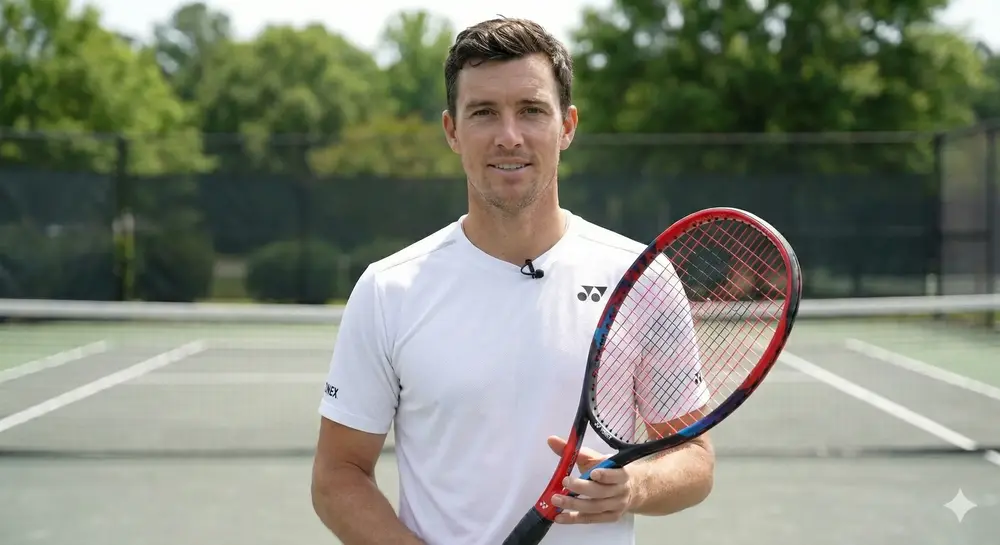
Chris Davies
Chris Davies conducts on-court playtesting and technical reviews to write guides for intermediate and advanced players. His reviews are grounded in baseline tests.