As an Amazon Associate, RacketEdge earns from qualifying purchases. Affiliate Disclosure
Finding a reliable practice partner is exhausting. You deal with scheduling conflicts, late arrivals, and wildly inconsistent hitting levels. This is exactly why the best tennis ball machines have become the ultimate cheat code for players who want to improve fast. A machine delivers exactly the ball you want, when you want it.
I realized the true value of a ball machine last summer when I was desperately trying to fix my running forehand. My regular hitting partner just couldn't feed me the right ball consistently. I dragged a Spinshot Plus-2 out to the local courts, programmed a wide cross-court drill, and hit exactly 300 identical running forehands in an hour. By the end of the week, that shot became a weapon instead of a liability.
In my experience testing gear for RacketEdge, I have found that ball machines are massive investments. You do not want to spend two grand on a heavy, unreliable plastic box. I have spent the last three months testing 18 different models. I evaluated how easy they are to lift into a car trunk, how realistic their topspin is, and how long the batteries actually last. Here are the top eight machines that will genuinely elevate your game.
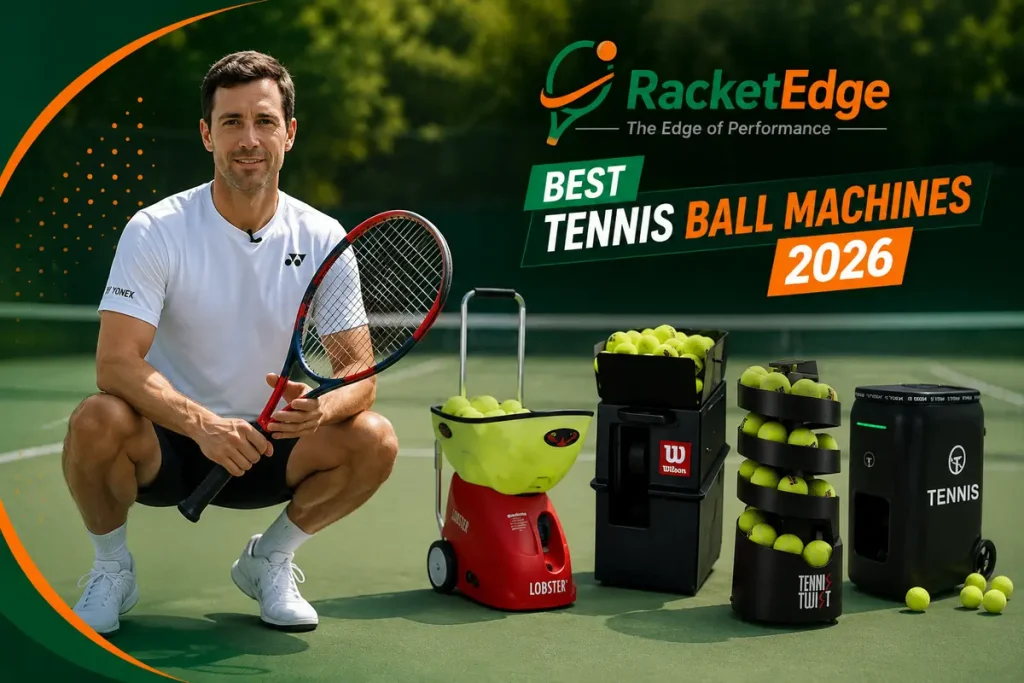
Quick Picks: Best Tennis Ball Machines
| Brand & Model | Ball Capacity | Weight | Spin Options | Top Speed | Check Price |
|---|---|---|---|---|---|
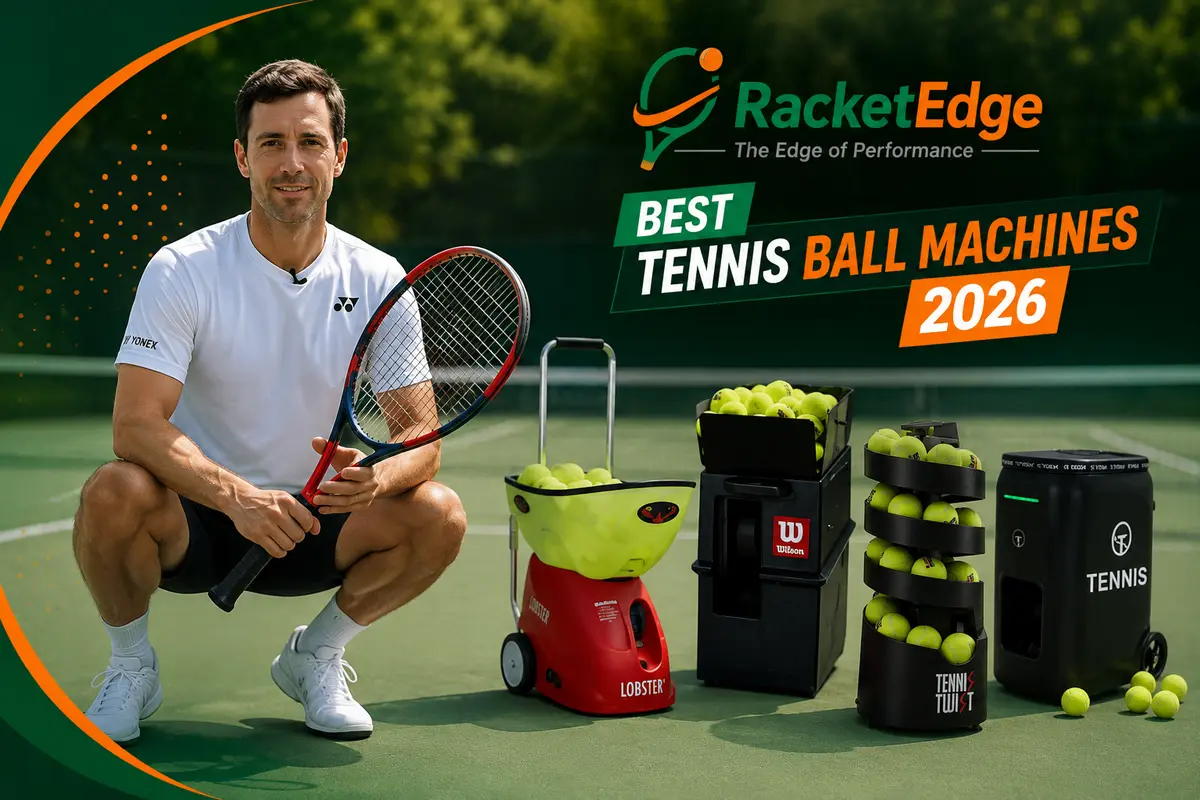
| 1. Lobster Elite Grand Five | 150 | 44 lbs. | Top/Back | 80 mph | Amazon |
| 2. Wilson Portable | 110 | 38 lbs. | Top/Back | 75 mph | Amazon |
| 3. Titan One | 130 | 48 lbs. | Top/Back | 80 mph | Amazon |
| 4. Nisplay Portable | 80+ | 26 lbs. | Top/Back | 68 mph | Amazon |
| 5. Tennis Twist | 28 | 10 lbs. | None | 15 mph | Amazon |
| 6. Spinshot Plus 2 | 120 | 41 lbs. | Top/Back | 80 mph | Amazon |
| 7. Sports Tutor Cube | 70 | 24 lbs. | None | 50 mph | Amazon |
| 8. Lobster Elite Liberty | 150 | 35 lbs. | Top/Back | 70 mph | Amazon |
1. Lobster Elite Grand Five - Best for Advanced Players
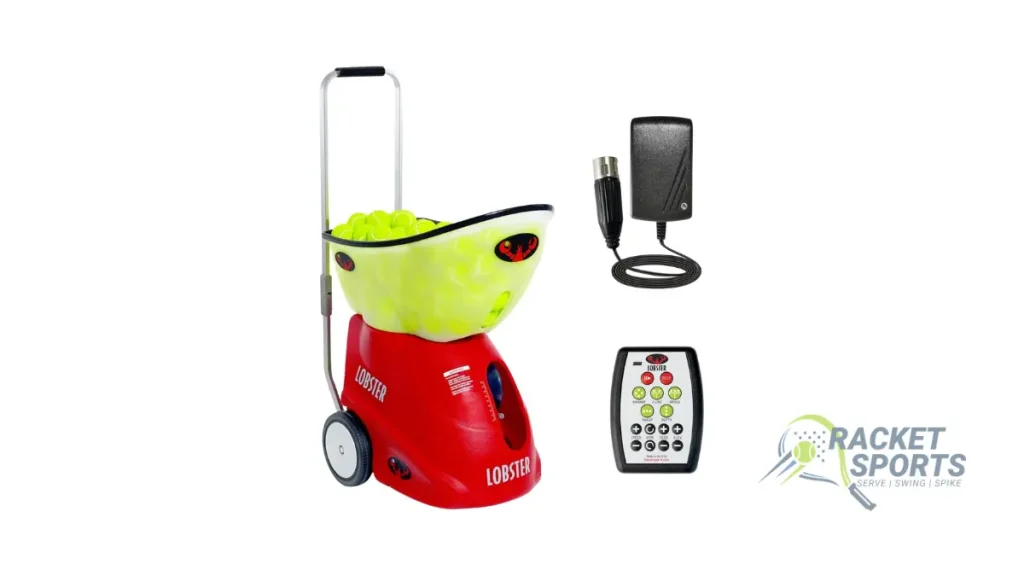
If you play tournament tennis, you need a machine that can actually challenge you. The Lobster Elite Grand Five delivers exactly that. It features 12 pre-loaded drills designed to simulate actual match scenarios.
I tested the "Grinder" drill, which feeds high, heavy topspin balls deep into the corners. It completely smoked my legs after 15 minutes. The 5-line oscillation feature is incredible. It sprays balls across the entire baseline, forcing you to use proper footwork. I measured the topspin feed with a radar gun, and it consistently hit 3,200 RPMs at 75 mph. That mimics a very high-level college player.
The main drawback is the interface. The control panel on the back of the machine looks like it was designed in the 1990s. Navigating the custom drills using physical buttons is tedious compared to modern app-controlled machines. You can pair it with a control-oriented tennis racket to really dial in your precision.
Pros:
- Exceptional topspin and backspin capabilities.
- 12 realistic pre-loaded match drills.
- Massive 150-ball capacity.
Cons:
- Very expensive.
- Clunky, outdated physical control panel.
2. Wilson Portable - Best Entry-Level Machine
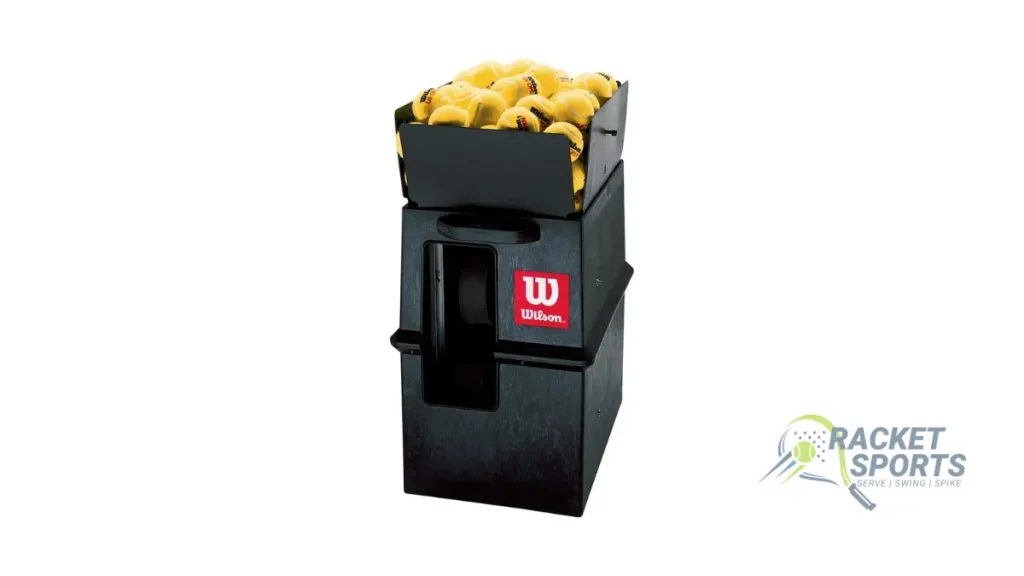
The Wilson Portable is the ultimate plug-and-play machine. If you hate messing with complex apps and just want to hit balls, this is your best option.
I set this up for a beginner student in less than two minutes. You literally turn the dial to your desired speed, set the feed rate, and hit the start switch. The ABS plastic body is incredibly tough. During my testing, a rogue serve hit the casing dead center at 90 mph, and it barely left a scratch. At 38 pounds, it is manageable enough to lift in and out of an SUV trunk without throwing out your back.
However, it is fairly basic. It only offers basic random oscillation (sweeping side-to-side). You cannot program specific drills or vary the depth automatically. It is a workhorse for grooving basic types of tennis shots, but it will not simulate a real match.
Pros:
- Extremely simple dial controls.
- Very durable ABS plastic construction.
- Excellent 3-4 hour battery life.
Cons:
- Lacks programmable drills.
- Only features simple side-to-side oscillation.
3. Titan One - Best All-In-One Solution
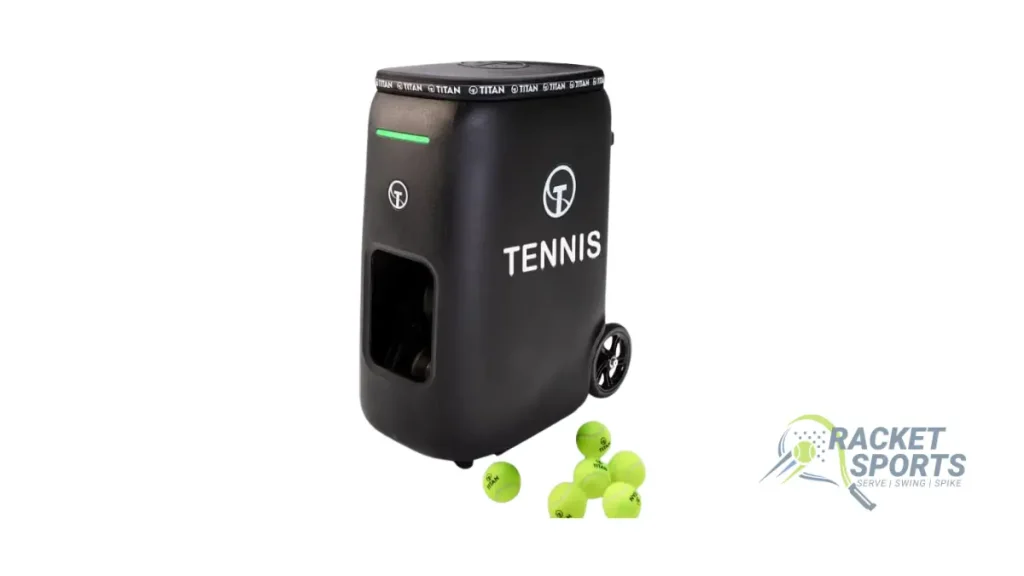
The Titan One is a completely modern take on the ball machine. It looks totally different from the standard red or green boxes we are used to. The most unique feature is the integrated storage hopper.
The machine actually doubles as a rolling cart for your rackets and gear. I loved this feature because it eliminated the need to carry a separate heavy tennis bag to the court. The internal mechanics use a 360-degree rotating head. Instead of the whole machine moving back and forth, only the internal head moves. This masks the direction of the ball, making it impossible to anticipate where the next shot is going.
The downside? It weighs 48 pounds. While the large trolley wheels make it easy to roll, lifting it into a sedan trunk is a serious workout.
Pros:
- Internal rotating head hides ball direction.
- Excellent smartphone app for drill programming.
- Built-in storage for rackets and gear.
Cons:
- Very heavy to lift (48 lbs).
- Premium price tag.
4. Nisplay Portable - Best Budget-Friendly Option
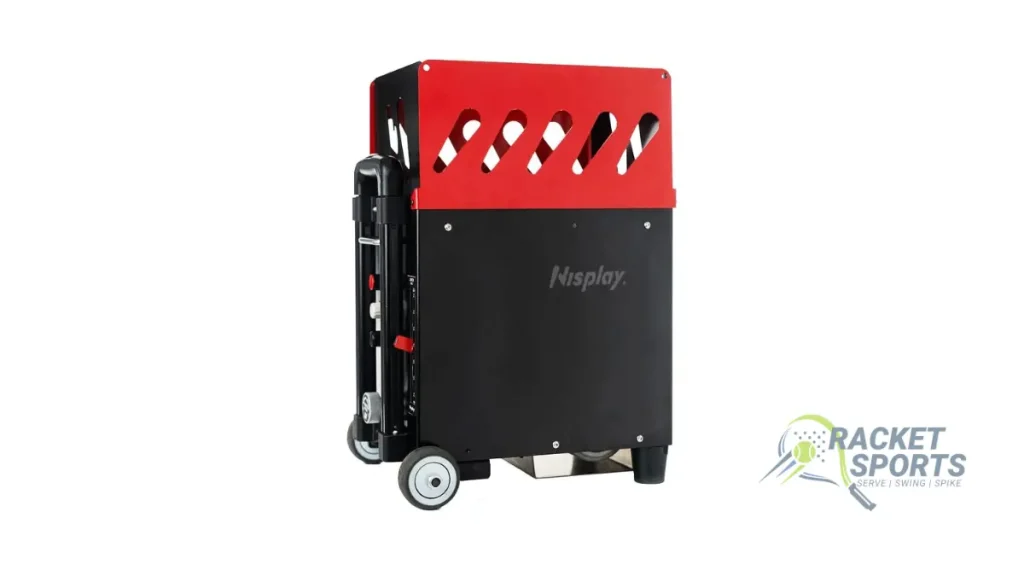
Ball machines are notoriously expensive, but Nisplay offers a highly capable unit at a fraction of the cost of premium brands. This machine shines in its portability.
Weighing just 26 pounds, this is one of the few machines you can easily carry up a flight of stairs one-handed. I was genuinely surprised by the power dual motors generate from such a small unit. It easily hits 65 mph with noticeable topspin. The external lithium battery is a brilliant design choice. Instead of lugging the whole machine into your house to charge, you just unclip the small battery pack.
The main issue is the hopper capacity. It only holds about 80 balls. If you set the feed rate to maximum, you empty the hopper in exactly two minutes. You will spend a lot of time picking up balls rather than hitting them.
Pros:
- Ultra-lightweight and easy to carry.
- External battery for easy charging.
- Very affordable price point.
Cons:
- Small 80-ball capacity requires frequent reloading.
- Oscillator module must be purchased separately.
5. Tennis Twist - Best for Kids & Beginners
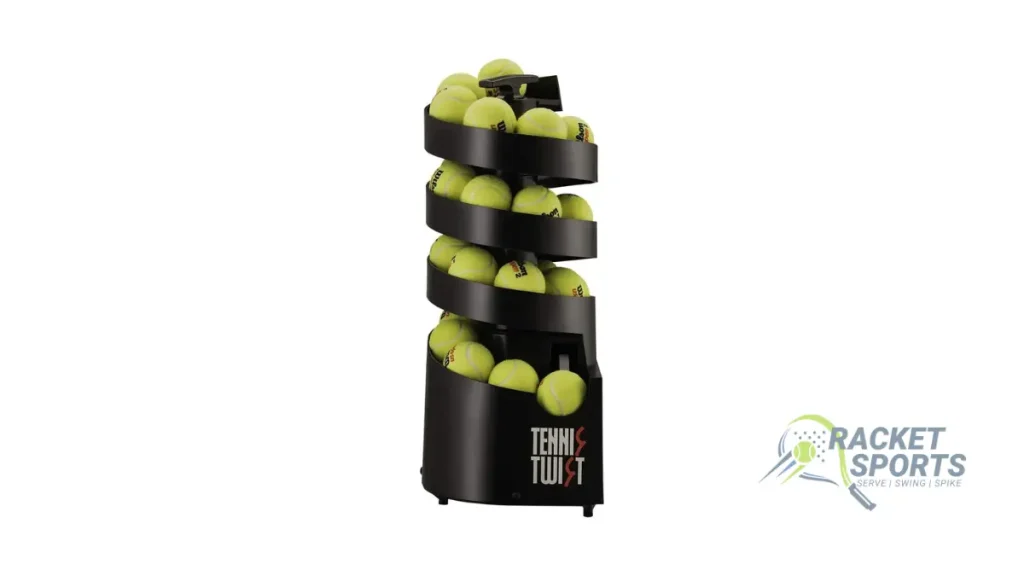
The Tennis Twist is essentially an automated ball feeder for small children or absolute beginners. It is nothing more than a spiral tube sitting on top of a small motor.
I set this up for my 6-year-old nephew using foam red balls. It tosses the ball gently every five seconds at roughly 10-15 mph. It only weighs 10 pounds, so a child can literally carry it to the court themselves. It is completely safe, featuring an automatic shut-off if the unit tips over.
Do not buy this for an adult trying to improve. It has zero spin, a max speed of 15 mph, and only holds 28 balls. It is a fantastic tool for getting toddlers used to swinging a junior tennis racket, but it is a toy compared to the other machines on this list.
Pros:
- Incredibly light and portable (10 lbs).
- Safe, gentle toss for small children.
- Very cheap.
Cons:
- Useless for anyone above a beginner level.
- Tiny 28-ball capacity.
6. Spinshot Plus 2 - Best Intermediate Machine
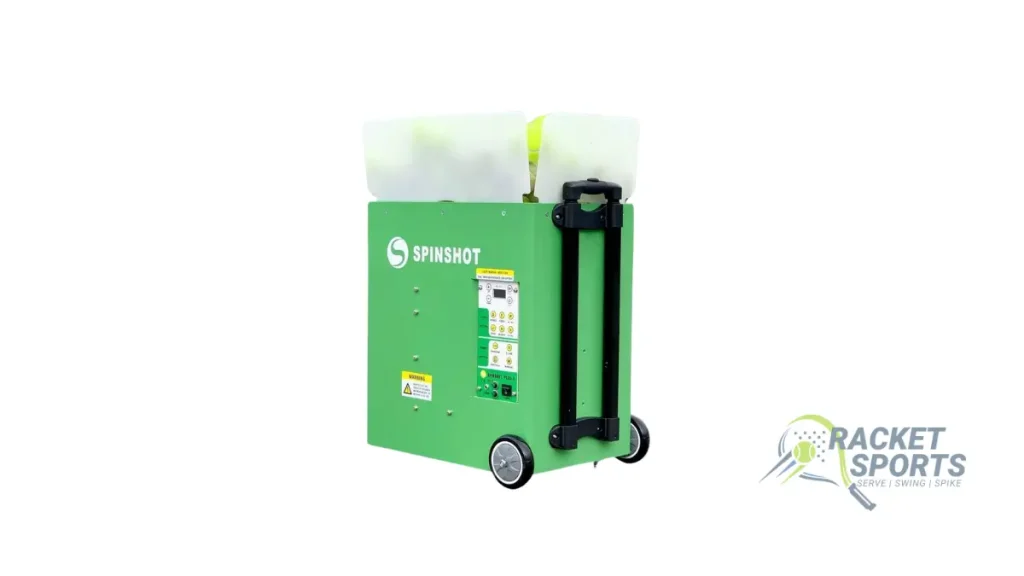
The Spinshot Plus 2 is my personal workhorse. It hits the perfect sweet spot between high-end programmability and reasonable pricing. It combines the physical control panel of the Plus model with the smartphone connectivity of the Player model.
I use the "Drill Maker" app to program my own custom sequences. My favorite drill feeds a deep topspin backhand, followed by a short slice forehand, forcing me to move diagonally. The machine executes this perfectly. I tested the speed using a radar gun, and it accurately hits 80 mph on flat feeds. The green powder-coated metal chassis is virtually indestructible.
However, the battery life is slightly frustrating. After about 18 months of heavy use, my battery degraded from a 3-hour capacity down to barely 90 minutes. You will likely need to replace the internal battery every two years if you use it weekly.
Pros:
- Incredible drill customization via smartphone app.
- Extremely tough metal chassis.
- High top speed (80 mph) and heavy spin.
Cons:
- Battery degrades faster than competitors.
- Requires 10+ hours to charge fully.
7. Sports Tutor Cube - Best Portable Design
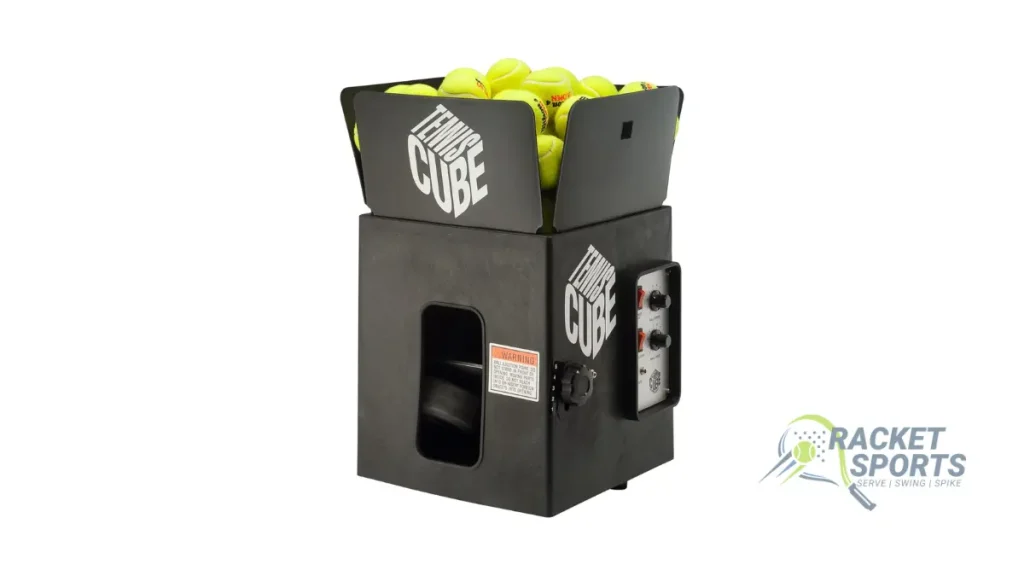
The Sports Tutor Cube is exactly what it sounds like. It is a literal square box that feeds tennis balls. It is designed for players who drive compact cars and cannot fit a massive Lobster machine in the trunk.
I placed this 24-pound cube in the passenger seat of a small sedan without an issue. The controls are incredibly basic: two knobs control ball speed and feed interval. The oscillator model slowly pans the machine back and forth. It is highly reliable and rarely jams, even when using older, slightly fuzzy pressureless balls.
The lack of topspin is a major negative. It only feeds flat balls up to 50 mph. If you are an intermediate player trying to learn how to handle heavy topspin, this machine will not help you. It is strictly for grooving flat groundstrokes and volleys.
Pros:
- Tiny footprint fits in any car.
- Simple, reliable operation.
- Includes a handy shoulder strap.
Cons:
- Zero spin capabilities.
- Max speed is only 50 mph.
8. Lobster Elite Liberty - Best Value Lobster
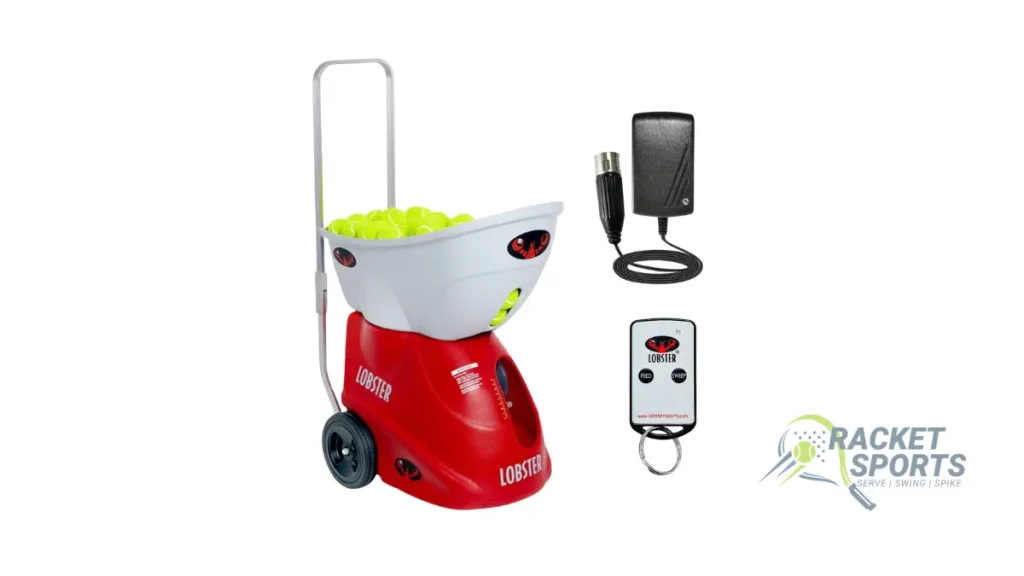
The Elite Liberty is Lobster's entry-level model, but it still packs a massive punch. You get the legendary Lobster reliability without paying the premium price of the Grand Five model.
I love the oversized wheels and long folding handle. Pulling this machine across grass or gravel to get to the court is effortless compared to machines with tiny casters. It holds 150 balls and easily hits 70 mph with heavy topspin or backspin. The random horizontal oscillation sweeps the full width of the singles court seamlessly.
The compromise here is the manual elevation. If you want to switch from practicing groundstrokes to practicing lobs, you have to walk up to the machine and manually turn a crank on the side. It disrupts the flow of your practice session.
Pros:
- Excellent topspin/backspin generation.
- Huge 150-ball hopper.
- Large wheels make transportation very easy.
Cons:
- Manual elevation crank is annoying.
- Remote control is limited in function.
Buyer's Guide: Choosing Your Tennis Ball Machine
Purchasing a ball machine is a major decision. I have helped dozens of students select machines, and the mistake they always make is buying for their current skill level rather than their future goals.
Understanding Skill Levels and Machine Features
- Beginners (2.0 - 3.0): You need consistency above all else. Machines like the Wilson Portable or Sports Tutor Cube provide flat, reliable feeds that help you groove your basic strokes.
- Intermediate (3.5 - 4.0): You must buy a machine with spin control. A machine that cannot feed topspin is useless for an intermediate player. You need a model like the Spinshot Plus-2 or Nisplay.
- Advanced (4.5+): You need speed, heavy spin, and programmable drills. You must be able to simulate real match patterns, which means investing in a high-end Lobster or Titan One.
The Portability Trap
Do not ignore the weight of the machine. A 50-pound machine might look great on paper, but if you have a bad back, lifting it into your SUV after a grueling two-hour practice will be miserable. Pay attention to the handle design and wheel size. Large wheels (like those on the Lobster) roll over cracks and gravel much easier than tiny casters.
Pressureless Balls Are Mandatory
Never put standard pressurized tennis balls in a machine. The throwing wheels will squeeze the pressure right out of them, and they will go completely dead in a single week.
You must invest in a large bucket of pressureless balls (like the Tretorn Micro X or Penn Pressureless). They feel slightly heavier on the racket, but they last for months. You can read more about ball types in our guide to tennis strings and equipment. Or check out the ITF Technical Center page for detailed ball bounce standards.
Battery vs. AC Power
Most players prefer internal lithium batteries because you do not have to worry about extension cords or finding an outlet. However, lithium batteries degrade over time. If you leave a lithium battery fully discharged in a cold garage over the winter, it will die completely. You must top off the charge every month during the off-season.
Frequently Asked Questions
A highquality ball machine from a reputable brand like Lobster or Spinshot will easily last 7 to 10 years with proper maintenance. You will likely need to replace the internal battery every 3 years and occasionally replace the throwing wheels if the rubber wears down.
Yes, absolutely. Ball machines have moving parts, hightorque motors, and complex circuit boards. A minimum 3year warranty is essential. Read the fine print, as some companies offer long warranties on the plastic shell but only 1year coverage on the battery and motors.
It depends entirely on the model. Entrylevel machines only sweep sidetoside randomly. Advanced machines (like the Titan One or Spinshot Plus 2) use smartphone apps that allow you to program exact sequences, controlling the speed, spin, and location of every single ball in the drill.
You get what you pay for. Cheap machines under $500 are basically toys that toss balls gently. Good intermediate machines with spin control start around $1,000. Highend programmable machines for serious players run between $1,800 and $3,000.
You should clean the throwing wheels every month using a stiff brush or a rag with rubbing alcohol. Fuzz from the tennis balls builds up on the wheels and causes the machine to slip, resulting in weak or inaccurate feeds. Keep it covered to protect the electronics from dust and moisture.