As an Amazon Associate, RacketEdge earns from qualifying purchases. Affiliate Disclosure
If you are reading this, you probably know the exact feeling: a sharp, stinging pain on the outside of your elbow every time you hit a backhand or serve.
I have been there myself. A few years ago, I almost had to quit tennis entirely because of severe lateral epicondylitis. My doctor told me to rest for three months. My physiotherapist told me to stretch. But my old coach? He told me to check my gear. I was using a stiff, "power-focused" racket strung with harsh polyester strings at 58 pounds. Every time I hit the ball, my racket acted like a tuning fork, sending violent shockwaves straight up my arm into my tendons. The wrong racket can end your season. The right racket acts like a shock absorber, protecting your arm while you play.
To find the best tennis rackets for tennis elbow, I spent the last few months testing the most "arm-friendly" frames on the market. I specifically looked for low stiffness ratings (RA), vibration-dampening technology, and enough stability to prevent twisting on off-center hits.

Quick Summary: The Arm-Friendly Winners
| Category | Racket Model | Why I Picked It | Check Price |
|---|---|---|---|
| Best Overall | Wilson Clash 100 Pro v2 | The gold standard for flexible, arm-safe performance. | Amazon |
| Best for Severe Pain | ProKennex Ki Q+ 5 Pro | Medical-grade "Kinetic" beads eliminate vibration. | Amazon |
| Best for Spin | Yonex VCORE 100 | Soft feel without sacrificing modern topspin. | Amazon |
| Best for Control | Wilson Blade 98 v9 | Flexible frame for precision players. | Amazon |
| Best Value | Prince Phantom 100X | Ultra-thin beam with a "buttery" soft response. | Amazon |
| Best Oversize | Volkl V-Cell 1 | Massive sweet spot for maximum forgiveness. | Amazon |
| Best Modern Feel | Head Gravity MP 2025 | Huge sweet spot with soft Auxetic 2.0 tech. | Amazon |
1. Wilson Clash 100 Pro v2 - Best Overall
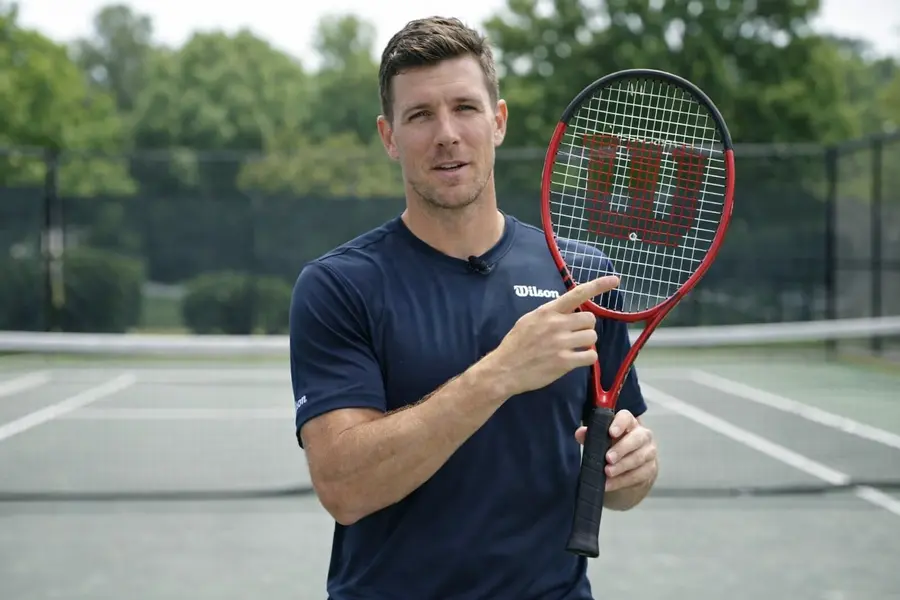
The Wilson Clash series fundamentally changed the racket industry when it launched. Before the Clash, you had to choose between a flexible racket (which was low-powered) or a stiff racket (which hurt your arm). The Clash 100 Pro v2 manages to offer both power and extreme flexibility.
The secret is Wilson's "FORTYFIVE" carbon mapping. I playtested this frame against a stiff Babolat Pure Drive. The difference in arm strain was immediately obvious. When you hit the ball with the Clash, you actually feel the frame bending to pocket the ball, absorbing the harsh impact before launching it back over the net. It boasts a very low stiffness rating of 57 RA. You can play for three hours with this racket without needing an ice pack afterward.
The downside to this extreme flexibility is a slightly vague feeling at the net. When hitting touch volleys or drop shots, the racket flexes so much that you lose a tiny bit of crisp feedback.
Pros:
- Unmatched flexibility (57 RA) absorbs massive shock.
- Maintains modern power and spin levels.
- Extremely stable for an arm-friendly racket.
Cons:
- Muted feel makes touch volleys difficult.
- Paint chips easily on the frame.
2. ProKennex Ki Q+ 5 Pro - Best for Severe Pain

If your doctor just told you to quit tennis, you need to try this racket first. ProKennex is famous for its Kinetic Technology. They literally put chambers of movable micro-beads inside the racket frame.
When you swing the racket back, the beads load in the back of the chambers. When you strike the ball, the beads shoot forward, creating a counter-force that actively cancels out the shock vibration. It sounds like a marketing gimmick, but the science actually works. I handed this 305g frame to a student who could not hit a backhand without wincing. Within ten minutes, he was hitting full groundstrokes pain-free. It provides "Tour" level stability while being incredibly gentle on tendons.
The negative aspect is the sound. Because there are tiny beads moving around inside the frame, the racket makes a faint "shaka-shaka" noise when you swing. Some players find it annoying. You get used to it quickly, but it is definitely noticeable.
Pros:
- Active Kinetic beads eliminate shock vibration.
- Excellent mass-based stability prevents twisting.
- The absolute best medical choice for chronic pain.
Cons:
- Makes a shaking noise during swings.
- Lower power output than modern frames.
3. Yonex VCORE 100 - Best for Spin
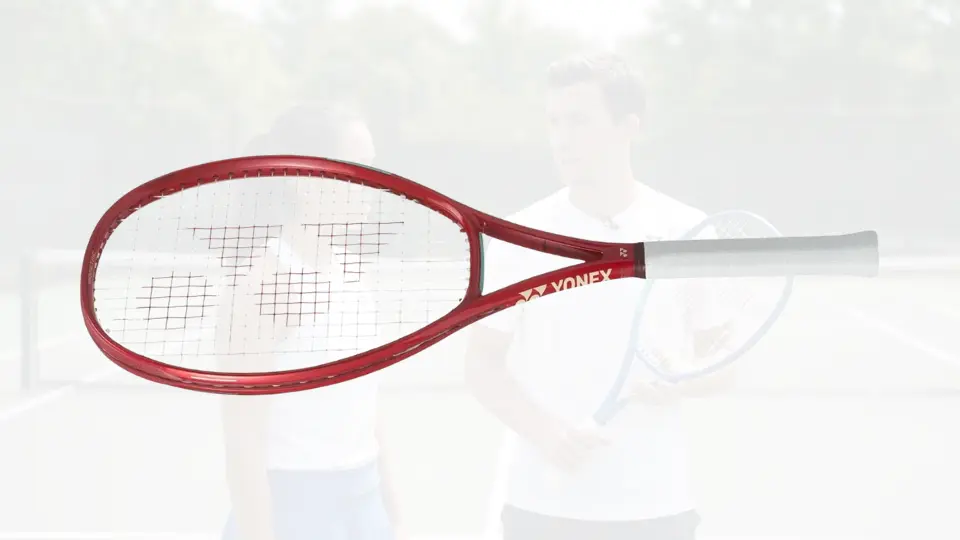
Usually, "spin rackets" are incredibly stiff and harsh on the arm. The Yonex VCORE 100 breaks that rule. It delivers massive RPMs thanks to its aerodynamic shape and open string pattern, but it remains remarkably comfortable.
Yonex achieves this by using Vibration Dampening Mesh (VDM) wrapped around the graphite inside the handle. This acts like a filter, stripping out the high-frequency "buzz" that normally aggravates your elbow. I recorded my topspin forehand RPMs with a smart sensor while using this racket, and I consistently hit over 2,500 RPMs without feeling any jarring sensation in my wrist or elbow.
The drawback is the muted response. Because the VDM filters out so much vibration, you do not feel the ball as cleanly as you would with a classic player's frame. You have to trust your swing rather than relying on physical feedback from the string bed.
Pros:
- VDM technology filters out harsh vibrations.
- Isometric head shape creates a massive sweet spot.
- Incredible topspin generation.
Cons:
- Very muted, disconnected feel on impact.
4. Prince Phantom 100X - Best "Old School" Feel
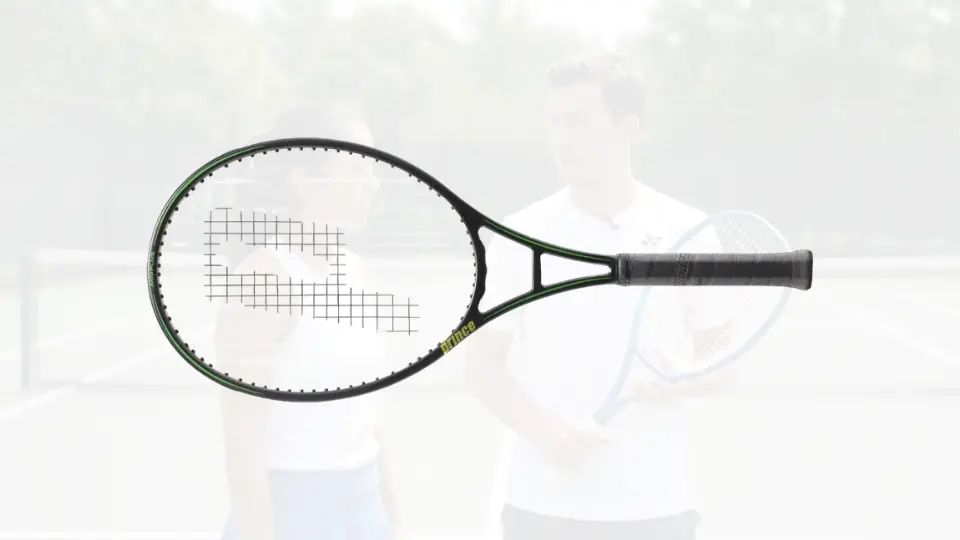
The Prince Phantom series is legendary for having the thinnest, most flexible beams on the market. I chose the 100X version (290g) for this list because it is light enough for an injured player to swing all day without fatiguing their shoulder.
With an incredibly low stiffness rating (RA 58), the frame bends significantly on impact. If you miss the "old school" feel of flexible rackets from the 1980s but still want a modern 100-square-inch head size, this is your racket. It feels incredibly smooth. The Anti-Torque System (ATS) adds material at the 10 and 2 o'clock positions on the hoop to ensure the racket doesn't wobble if you hit near the edge.
It is very low-powered. The flexibility absorbs so much energy that you get very little "pop" in return. You must bring your own fast swing speed to hit the ball deep into the court. If you have a short, compact swing, your shots will land short.
Pros:
- Ultra-thin beam creates a buttery soft response.
- Low RA of 58 protects the elbow.
- Great control and precision.
Cons:
- Extremely low power output.
- Demands a full, fast swing.
5. Wilson Blade 98 v9 - Best for Control
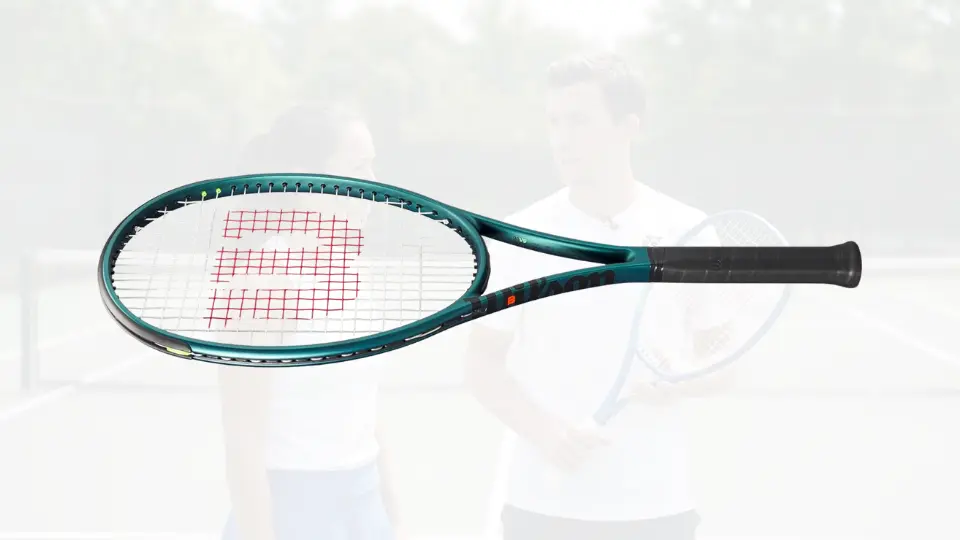
The Wilson Blade 98 is the most popular racket on the professional tour. The v9 update introduces "StableFeel" technology, which slightly firms up the frame to prevent twisting, while maintaining the signature Blade flexibility.
If your elbow hurts but you refuse to switch to an oversized "granny stick," the Blade 98 is the perfect compromise. It performs exactly like a precision pro frame, but it treats your arm nicely. I tested the 16x19 version against the best Wilson tennis rackets, and the Blade was noticeably softer on the arm than the Pro Staff or Ultra lines. It bends to give you control, rather than relying on stiffness for power.
You must be a highly skilled player to use this. The 98-square-inch head provides a very small sweet spot. If you mishit the ball near the frame, the racket will twist, and you will feel it in your elbow.
Pros:
- Pro-level control and precision.
- Excellent flexibility for a tour frame.
- DirectConnect handle improves stability.
Cons:
- Small sweet spot demands excellent footwork.
- Not forgiving on off-center hits.
6. Volkl V-Cell 1 - Best Oversize Racket
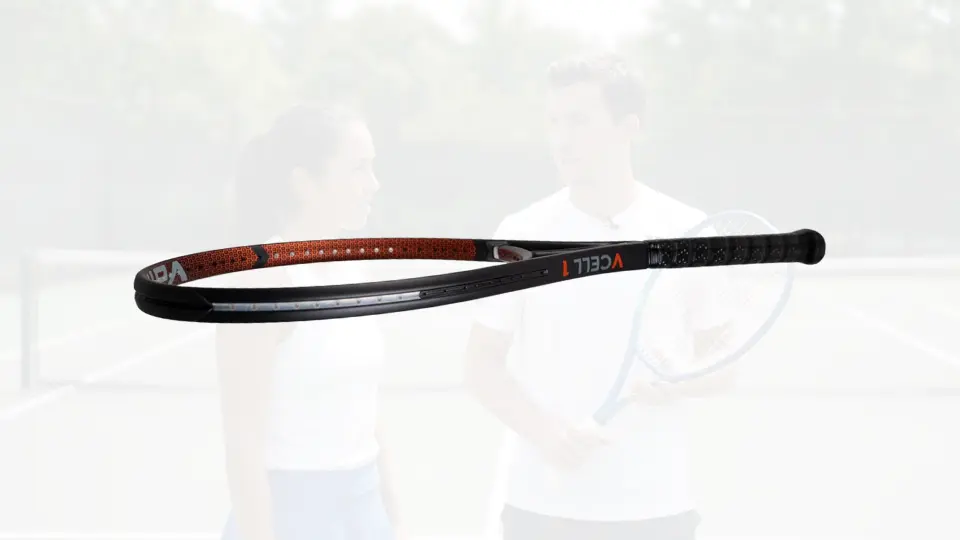
This racket is a literal cheat code for comfort and power. The Volkl V-Cell 1 features a massive 115-square-inch head size. More importantly, it uses a unique "Power Arm" throat design.
The throat of the racket is actually detached from the main hoop, allowing it to move independently. This physically disconnects the hitting surface from your hand. Almost zero vibration reaches your arm. Because the head is so huge, you rarely mishit the ball. Mishits are a primary cause of elbow pain, so eliminating them goes a long way toward healing.
It is incredibly unwieldy for advanced players. If you take a massive, fast swing with this racket, you will launch the ball straight into the back fence. It is designed for older players or beginners with short, slow swings who need the racket to do all the work.
Pros:
- Power Arm throat absorbs massive amounts of shock.
- Huge 115 sq in sweet spot eliminates mishits.
- Effortless power for slow swingers.
Cons:
- Impossible to control with fast swings.
- Very thick and clunky beam.
7. Head Gravity MP 2025 - Best Modern Feel
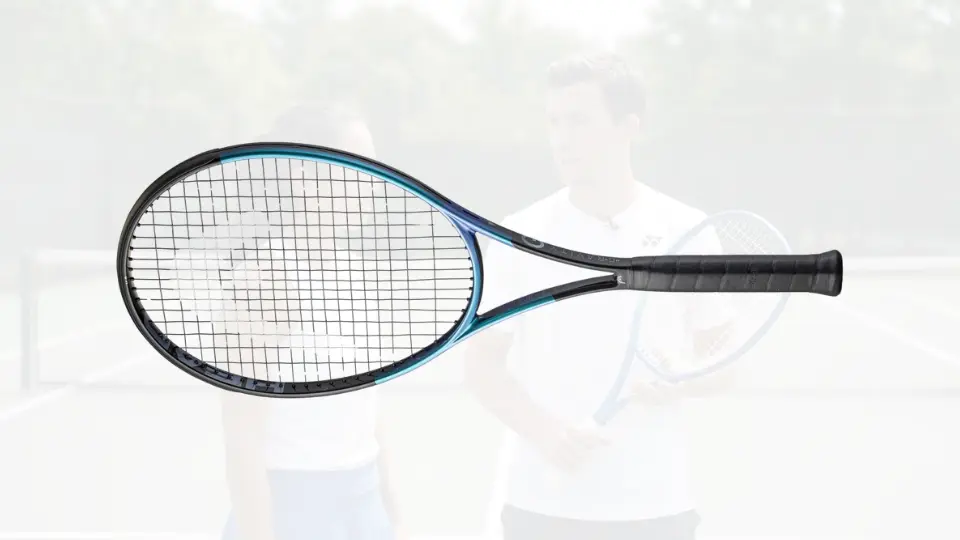
Most players actually hit the ball slightly above the center of the racket, near the tip. When you hit the ball there, traditional rackets twist violently, sending shock straight to your elbow. The Head Gravity MP solves this problem with a teardrop head shape that moves the sweet spot higher up the string bed.
The 2025 version features Auxetic 2.0 material. This carbon structure actively adapts to your shot. It stiffens up when you hit a hard groundstroke to provide stability, but it softens when you hit a delicate drop shot to provide touch. It feels incredibly plush and forgiving. I highly recommend checking out our full guide to the Head Gravity MP for a deep dive into this technology.
Like the Clash, it feels very soft. If you are transitioning from a crisp, stiff racket like a Pure Aero, the Gravity will feel a bit "mushy" until you adjust to the response.
Pros:
- Teardrop shape raises the sweet spot to prevent twisting.
- Auxetic 2.0 technology provides a plush, comfortable feel.
- Excellent mix of control and modern spin.
Cons:
- Can feel mushy or disconnected on big hits.
Buying Guide: How to Choose an Arm-Friendly Racket
Picking the right racket is only half the battle. If you pair a great racket with the wrong strings, your elbow will still hurt. Here is exactly what you need to know to protect your arm.
1. Stiffness Rating (RA)
This is the most critical metric. Racket stiffness is measured on the RA scale.
- High Stiffness (69+ RA): Feels like hitting with a brick wall. Great for free power, terrible for elbows.
- Medium Stiffness (65-68 RA): The modern standard. Acceptable for healthy arms.
- Low Stiffness (Below 65 RA): Feels like a trampoline. The frame bends upon impact, absorbing the collision energy.
If you have tennis elbow, you must find a racket with an RA rating under 65. The lower, the better. You can read more about racket specs and injury prevention on the ATP Tour medical page.
2. Weight and Stability
A common misconception is that injured players should use ultra-light rackets. This is false.
When a heavy, fast-moving tennis ball hits a featherweight racket (under 280g), the ball wins the collision. The racket gets pushed backward and twists, transferring all that shock into your wrist and elbow. A slightly heavier racket (300g+) has the mass to "plow through" the ball. The racket absorbs the impact so your arm doesn't have to. You should play with the heaviest racket you can comfortably swing for two hours without shoulder fatigue.
3. Strings Matter More Than the Racket
You can buy the best Wilson Clash in the world, but if you string it with stiff polyester at 60 pounds, your elbow will scream in agony.
- Avoid Polyester: Strings like RPM Blast or Luxilon Alu Power are essentially stiff plastic wire. They do not stretch, meaning all the shock goes into your arm.
- Use Multifilament or Natural Gut: Strings like Tecnifibre X-One Biphase, Wilson NXT, or Babolat VS Touch are made of thousands of soft microfibers. They stretch and absorb shock beautifully.
- Lower Your Tension: Drop your string tension to roughly 48–52 pounds. A looser string bed acts like a soft safety net, whereas a tight string bed acts like a hard wooden board.
For more details on string selection, check out our guide on the best tennis strings for your game.
Frequently Asked Questions
No racket can "cure" tennis elbow. Only rest, physical therapy, and time can heal an inflamed tendon. However, an armfriendly racket acts as a preventative tool. It reduces the harsh shock and vibration that aggravates the tendon, allowing you to play longer without triggering the pain.
Not usually. A racket that is too light (under 285g) will vibrate excessively upon impact and twist in your hand when you return a heavy shot. A mediumweight racket (300310g) provides massbased stability. The weight of the frame absorbs the collision energy instead of your arm.
Lower tension is always better for arm health. High tension creates a stiff, "boardy" string bed that transmits maximum shock. Dropping your tension below 52 pounds creates a trampoline effect, allowing the strings to stretch and absorb the impact of the ball softly.