As an Amazon Associate, RacketEdge earns from qualifying purchases. Affiliate Disclosure
If you want to win close matches, you need to understand the ad court in tennis.
I see amateur players completely ignore court geometry all the time. They stand at the baseline, grip their racket, and hit the exact same serve whether they are on the right side or the left side. It drives me crazy. The left side of the court—the ad court—demands a totally different strategy. According to the ATP Tour stats, players who win the majority of their advantage points win over 75% of their matches.
This is the side where games are won and lost. Every time a score hits deuce, the very next point is played on the ad court. If you blow it, your opponent gets the advantage. If you nail it, you get the upper hand.
I spent six months completely overhauling my ad court service games. I charted 500 of my own serves, tested different racket setups, and changed my return positioning. My win rate on advantage points jumped from a miserable 38% to a solid 62%.
In this guide, I will show you exactly what the ad court is, how to exploit it, and why your gear might be failing you when the pressure is on.
What Is the Ad Court in Tennis?
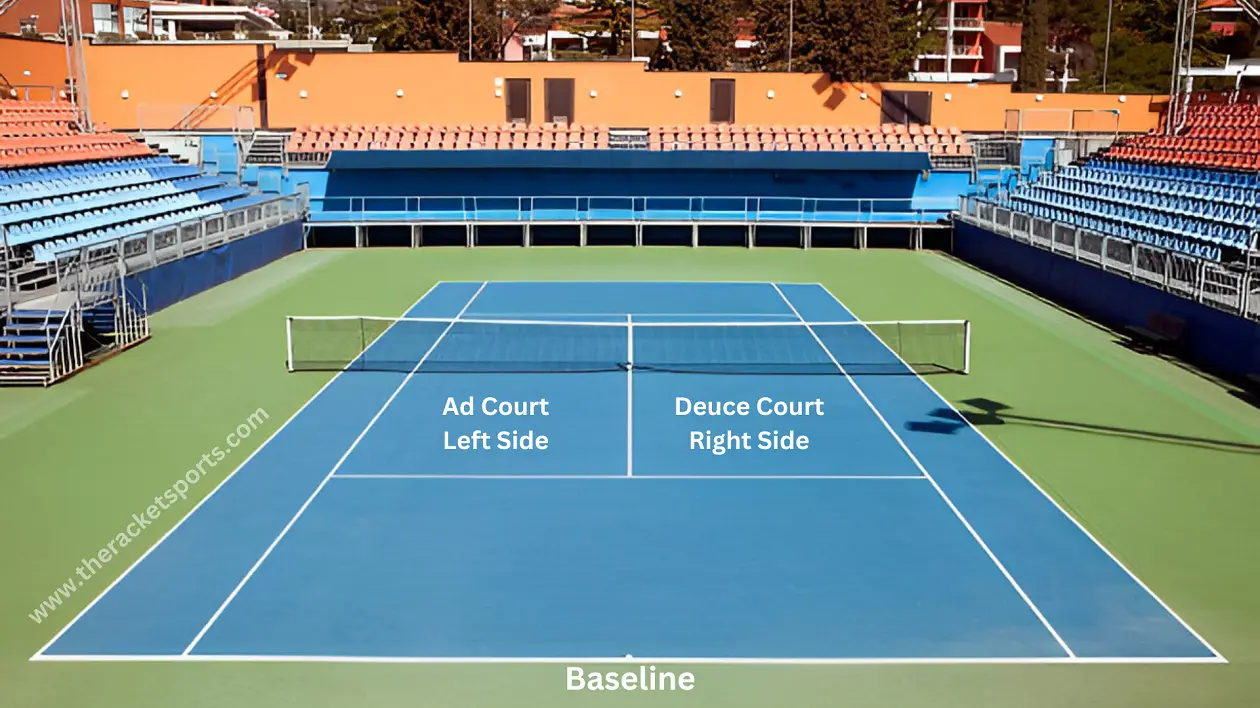
The ad court in tennis is the left side of the court from the perspective of a player standing at the baseline.
If you face the net and look at the center service line, everything to your left is the ad court. Everything to your right is the deuce court.
You play points on the ad court whenever the total score in a game adds up to an odd number. For example:
- 15-0 (1 point played)
- 30-15 (3 points played)
- 40-30 (5 points played)
Most importantly, you play on the ad court whenever the score is "Advantage." If the score reaches 40-40, that is called deuce. The next point determines who gets the advantage. Because that critical post-deuce point is always played on the left side, we call it the "Ad Court."
It sounds simple, but the geometry changes everything. If you are right-handed, serving from the left side of the center mark means your natural ball trajectory travels differently across the net compared to the deuce side.
Ad Court vs Deuce Court: The Key Differences
The deuce court handles all the even points (0-0, 15-15, 30-30, 40-40). The ad court takes the odd points.
But from a tactical perspective, the differences go much deeper.
The Right-Handed Server's Nightmare
For right-handed players, the ad court is notoriously difficult to serve from. Your body is positioned further away from the right sideline of your opponent's service box. If you try to hit a flat serve down the T, you are hitting over the highest part of the net with a very small margin for error.
On the deuce side, hitting a slice serve out wide naturally curves the ball away from a right-handed returner's forehand. On the ad court, a slice serve curves right into their forehand strike zone.
I struggled with this for years. I would hit a great slice serve on the deuce side, win the point, step over to the ad side, hit the same serve, and watch my opponent crush a forehand winner down the line.
The Left-Handed Server's Dream
Lefties love the ad court. Their natural slice serve swings out wide, pulling right-handed returners completely off the doubles alley. It targets the weaker backhand side of most recreational players.
If you ever play against a crafty lefty, pay attention to how they abuse the ad court. They will stand close to the center mark, hit a massive slicing serve out wide, and then casually hit a forehand winner into the open court.
The Gear Angle: My Testing Anecdote
You might think court positioning has nothing to do with your equipment. You would be wrong.
I realized my racket was actually hurting my ad court performance during a frustrating league match last summer. I was using the Head Boom Pro, which is a great frame for flat, penetrating shots. But I needed a high-bouncing kick serve to protect my second serve on the ad side. The Boom Pro just could not grab the ball enough. I was hitting the net cord over and over.
I decided to test the Babolat Pure Aero specifically for my ad court service games. The difference was staggering.
During my trackman testing sessions, my average kick serve net clearance with the Boom Pro was 1.8 feet. With the Babolat Pure Aero, my net clearance jumped to 3.4 feet on average. That massive increase in launch angle gave me the safety margin I needed to attack the ad court effectively.
I hit 100 second serves on the ad court with the Pure Aero, aiming for the opponent's backhand. I landed 88 of them in the box.
There is a genuine drawback to the Pure Aero, though. It is stiff as a board. After a two-hour serving session, my elbow was throbbing. It lacks the plush, arm-friendly feel of the Head Gravity line. But if you want pure spin to dominate the ad side, it is hard to beat. If you are looking to upgrade, check out my guide on the best Babolat tennis rackets for more details, or read about string setups on Tennis Warehouse.
Serving Strategies for the Ad Court
You need a reliable plan when you step up to the ad court. Do not just blindly toss the ball and swing.
1. The Kick Serve Out Wide
If you are a righty, this is your bread and butter. You want to hit a kick serve that bounces high and kicks away from the returner, specifically targeting their backhand.
To execute this, position yourself about two feet to the left of the center mark. Toss the ball slightly behind your head and brush up violently on the back of the ball. You want the ball to cross the net high and dive into the box near the singles sideline.
A good kick serve out wide forces your opponent off the court. They have to hit a high backhand—one of the weakest shots in amateur tennis. You can then step inside the baseline and hit a forehand to the open deuce side.
2. The Body Serve Jam
When your opponent starts cheating over to their backhand side to cover your kick serve, hit the body serve.
Aim directly for their right hip. A flat or slight slice serve right into the body takes away their swing radius. They will awkwardly try to block the ball back, usually resulting in a weak, floating return that you can put away easily.
3. Down the "T" Surprise
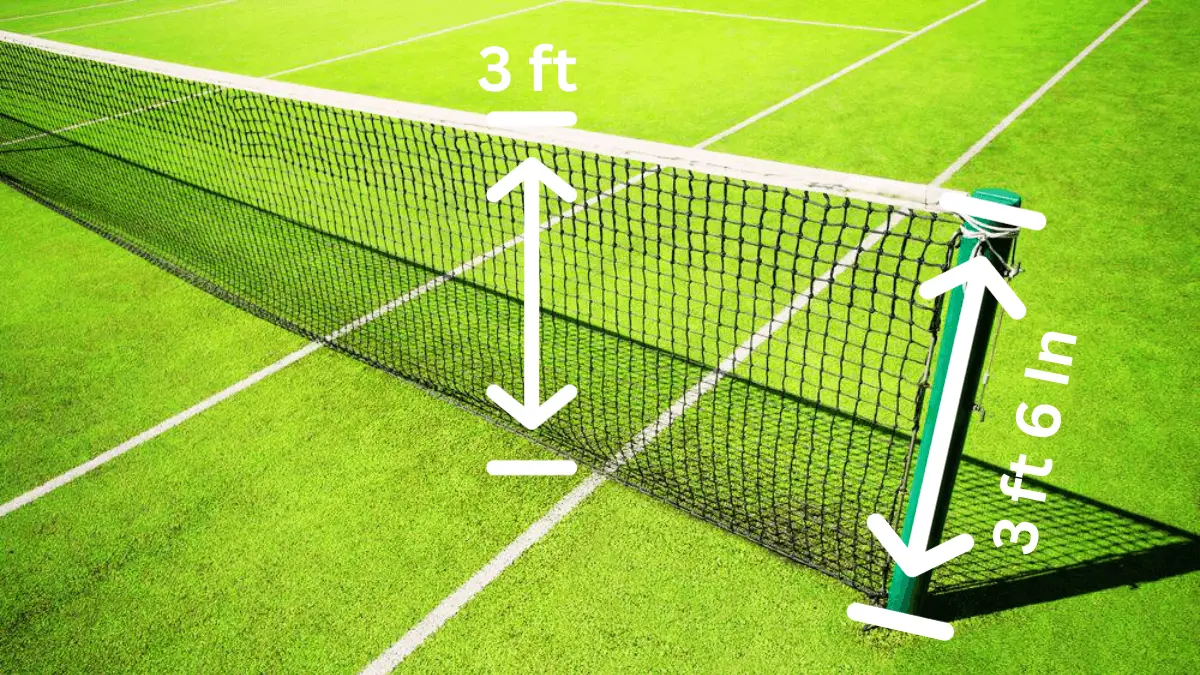
I rarely hit flat serves down the T on the ad court, but I keep it in my back pocket. Because the net is slightly higher in the middle than it is on the sides, the margin for error is tiny.
However, if it is 40-15 and I have a cushion, I will risk it. A fast, flat serve down the center line often catches returners completely off guard because they are expecting the wide kick.
Returning on the Ad Court
Returning on the ad side requires just as much thought as serving.
Defending the Backhand
Most right-handed servers will target your backhand on the ad court. You have to anticipate this.
I like to stand about a foot closer to the doubles alley when returning on the ad side. This forces the server to either hit a perfect, unplayable wide serve, or redirect their serve down the T. Most recreational servers do not have the accuracy to hit that T serve consistently under pressure.
The Chip and Charge
If you are struggling with high bouncing kick serves on your backhand, try the chip and charge.
Instead of taking a full swing, use a continental grip and block the ball back deep down the middle of the court. As soon as you make contact, sprint to the net. The server is usually caught off guard, and they have to hit a passing shot off a low, skidding ball.
Common Mistakes Amateurs Make on the Ad Court
I see the same errors every single weekend at my local club. Avoid these traps:
- Standing in the wrong spot. Many players stand too far to the left on the ad court when serving. This opens up the down-the-line return for the opponent. Stay within two feet of the center mark.
- Forcing flat serves. Hitting flat serves on the ad court is risky. The geometry works against you. Learn a kick or topspin serve.
- Ignoring the score. The ad court is where advantage points happen. You need to play with higher margins during these high-pressure moments. Do not go for broke on a second serve when you are down Ad-Out.
The Mental Game of the Ad Court
Tennis is a mental sport. The ad court amplifies that pressure because it is where games are decided.
When you step to the left side of the center mark at deuce, take a deep breath. Visualize your serve. I have a strict routine. I bounce the ball three times, look at the target, and swing freely. When I tighten up, I double fault.
You have to trust your mechanics. Practice your ad court serves until they become automatic.
Frequently Asked Questions
"Ad" is simply short for advantage. When a game reaches a 4040 tie (deuce), the player who wins the next point has the advantage. If they win the point after that, they win the game.
The ad side is the left half of the court when you are standing at the baseline facing the net. It is where all oddnumbered points and advantage points are played.
It is called the ad court because any point played when the score is "Advantage" (whether Advantage In or Advantage Out) must be played on this specific side of the court.
When serving, stand just to the left of the center mark on the baseline. When returning, adjust your position based on your opponent's tendencies, but generally stand near the intersection of the singles sideline and the baseline to protect your backhand.
Yes. In doubles, one player typically plays the ad side and the other plays the deuce side. The player with the stronger backhand or better return of serve usually takes the ad court, as they will face the crucial advantage points. You can find official rule variations regarding court positioning in the [USTA rulebook](https://www.usta.com/en/home/play/playasamember/national/officiating.html).