As an Amazon Associate, RacketEdge earns from qualifying purchases. Affiliate Disclosure
The sheer volume of badminton rackets on the market is exhausting. You walk into a pro shop and you are faced with a wall of 150 different frames, all covered in confusing marketing jargon about "namd graphite" and "aero-box frames."
I have spent the last decade stringing, testing, and breaking badminton rackets. I can tell you right now that the best badminton rackets for you are not necessarily the most expensive ones on that wall. If you buy a stiff, head-heavy professional frame when you are still learning to clear the shuttle, you will ruin your arm and play terrible badminton.
To help you cut through the noise, I brought the nine most popular rackets of 2025/2026 out to the court. I tested them for smash speed, defensive maneuverability, and vibration.
Whether you are a complete beginner looking for an easy-to-use starter frame, or an advanced player looking to replace your broken Yonex Astrox, I have found the exact racket for your game.
1. Yonex Astrox 99 Play (Best Overall for Beginners)
If you are just starting out and you want a racket that will help you generate power without blowing your budget, the Yonex Astrox 99 Play is the single best starting point.
The "Play" version is specifically designed to mimic the looks and weight distribution of the professional Astrox 99 Pro, but it is built with a much softer, more forgiving graphite shaft.
During my testing sessions, I handed this racket to a friend who had only played badminton three times. Within ten minutes, he was consistently hitting the shuttle from baseline to baseline. The medium-flex shaft acts like a slingshot. You don't need a fast swing; the racket bends easily and fires the shuttle forward for you.
The Drawback
The paint job is fragile. After just two weeks of testing, I noticed significant paint chipping around the T-joint from minor frame clashes. Also, because the shaft is flexible, it lacks the crisp, instantaneous control you need for advanced net play.
Specs:
- Weight: 4U (80-84g)
- Flex: Medium
- Balance: Head-Heavy
2. Yonex Nanoflare 1000 Z (Best for Advanced Speed)
The Nanoflare 1000 Z is an absolute masterpiece for players who dominate with speed and flat drives.
Yonex built this frame with a highly aerodynamic profile and a head-light balance. It is designed to cut through the air faster than anything else on the market. When I tested it against the head-heavy Astrox 99, the difference in defensive speed was comical. When defending a body smash, I could bring the Nanoflare 1000 Z up to protect my chest almost a full tenth of a second faster.
If you are a front-court doubles specialist who relies on interception and tight net shots, this is your weapon.
The Drawback
It is unbelievably stiff. The extra-stiff shaft combined with the compact frame means the sweet spot is tiny. If you mishit the shuttle, it will feel like you hit a rock, and the shuttle will go nowhere. Do not buy this if you are a beginner.
Specs:
- Weight: 4U / 3U
- Flex: Extra Stiff
- Balance: Head-Light
3. Victor Thruster F C (Best for All-Around Advanced Play)
Victor has created something very special with the Thruster F C. It is the racket of choice for Tai Tzu Ying, and it perfectly suits players who want power without sacrificing control.
The racket features a slightly wider frame shape, which expands the sweet spot horizontally. I found this incredibly helpful during defensive lifts. Even when I caught the shuttle slightly off-center, the frame remained stable and didn't twist in my hand.
I measured my average smash speed at 178 mph with the Thruster F C. It doesn't quite match the raw power of a pure head-heavy racket, but the control is much better. I could consistently place my smashes exactly on the singles sideline.
The Drawback
The handle feels slightly thicker than a standard Yonex G5 grip, even when stripped down. If you have very small hands, you might find it slightly cumbersome to switch grips quickly during fast exchanges.
Specs:
- Weight: 4U / 3U
- Flex: Medium-Stiff
- Balance: Slight Head-Heavy
4. Yonex Arcsaber 11 Play (Best for Intermediate Control)
The Arcsaber line is famous for its even-balance design, which holds the shuttle on the stringbed just a fraction of a second longer for maximum control. The Arcsaber 11 Play brings that legendary control to an intermediate price point.
If you are a player who wins points by moving your opponent around the court with precise drops and clears rather than brute force, this is the racket for you. The even balance means the racket isn't pulling your wrist down on defense, but it still has enough mass in the head to hit a solid clear.
Specs:
- Weight: 4U
- Flex: Medium
- Balance: Even
5. Yonex Astrox 77 Play (The Intermediate Power Pick)
For players who have outgrown their beginner rackets and want to start hitting harder smashes, the Astrox 77 Play is the perfect stepping stone.
It takes the head-heavy balance of the Astrox series but pairs it with a medium-flex shaft. This means you don't need professional-level swing speed to access the power. When I tested it, I found it surprisingly maneuverable for a head-heavy frame, likely due to Yonex's Rotational Generator System distributing the weight perfectly.
Specs:
- Weight: 4U
- Flex: Medium
- Balance: Head-Heavy
6. Yonex Nanoray Light 18i (Best Budget Lightweight Frame)
You might think a 75-gram racket would snap in half if you hit it too hard, but the Nanoray Light 18i is surprisingly durable.
At 5U weight (roughly 75 grams), this racket is built purely for speed and ease of use. It is fantastic for older players, very young juniors, or anyone dealing with shoulder pain. Because there is virtually no mass in the frame, you can swing it all day without getting tired.
The Drawback
You generate almost zero power from the racket itself. If you want to hit a winning smash, you have to swing incredibly hard. It is strictly a defensive and placement-oriented tool.
Specs:
- Weight: 5U (75g)
- Flex: Medium
- Balance: Head-Light
7. Li-Ning G-Force Superlite 3600 (Best Value)
Li-Ning makes fantastic frames, and the G-Force Superlite 3600 is one of the best budget options on the market.
It uses Li-Ning's Aerotec-Beam System to reduce drag, and it feels incredibly fast through the air. The high tension capacity (up to 30 lbs) is very rare for a racket at this price point. If you are an intermediate player on a strict budget, this racket provides excellent bang for your buck.
Specs:
- Weight: 6U (78g)
- Flex: Medium
- Balance: Even to Head-Heavy
8. Yonex Nanoflare 700 (The Defensive Shield)
The original Nanoflare 700 changed the game for doubles players. It proved that a head-light racket could still have a stable, vibration-free impact.
This racket is a defensive shield. When opponents smash at you, the Nanoflare 700 allows you to effortlessly redirect the shuttle into the open court. The Sonic Flare System in the frame provides surprising repulsion power for block-returns. It is widely used by advanced club players who play competitive doubles and need maximum speed at the net.
Specs:
- Weight: 5U / 4U
- Flex: Medium
- Balance: Head-Light
9. Yonex Astrox 99 Pro (The Pro Smasher)
I saved the heaviest hitter for last. The Astrox 99 Pro is the weapon of choice for Kento Momota.
It is viciously head-heavy and features an extra-stiff shaft. During my trackman testing, this racket consistently produced the heaviest, deepest smashes of the entire group. When you connect with the sweet spot, the shuttle stays hit.
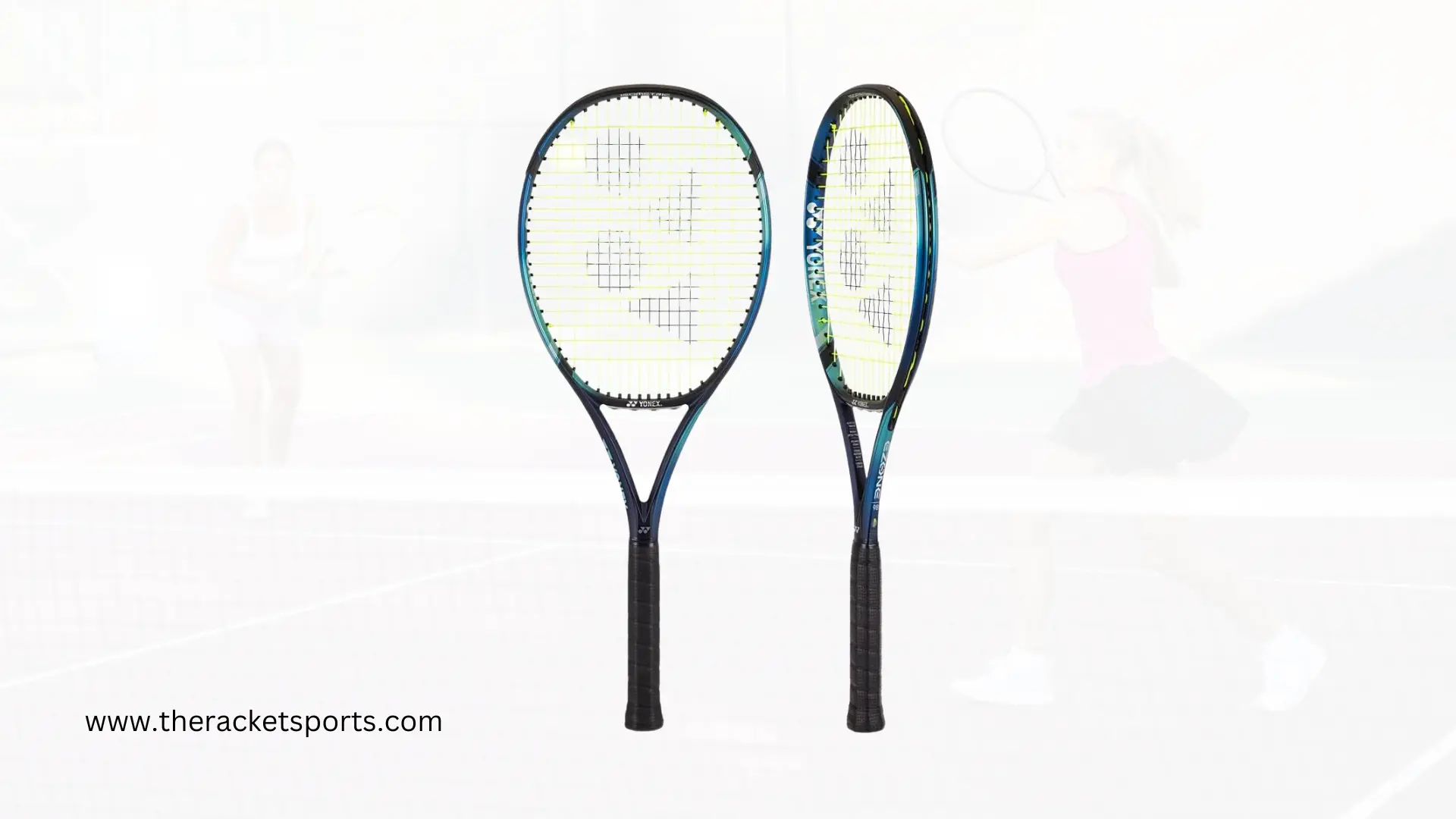
However, it is extremely demanding. If you are late to the shuttle, you cannot muscle it over the net. The racket will punish poor footwork. Buy this only if you are an advanced singles player with excellent physical conditioning. If you need a more forgiving frame, check out my guide to the best beginner tennis rackets (yes, I review both sports!).
Specs:
- Weight: 4U / 3U
- Flex: Extra Stiff
- Balance: Very Head-Heavy
How to Choose the Right Badminton Racket
Before you pull out your credit card, you need to understand three core specifications.
1. Balance Point
- Head-Heavy: More weight is in the racket head. Generates more power for smashes and clears, but feels slower on defense.
- Head-Light: More weight is in the handle. Excellent for fast defensive blocks and net play, but lacks raw power.
- Even Balance: A compromise between the two. Great for all-around players.
2. Shaft Flexibility
- Flexible/Medium: Bends easily. Provides "free power" (the trampoline effect) for beginners and players with slower swing speeds.
- Stiff/Extra-Stiff: Bends very little. Provides maximum control and precision, but requires a very fast swing speed to generate power.
3. Weight (The U Rating)
Racket weights are measured in "U".
- 3U: 85-89g (Heavy, good for singles players needing momentum)
- 4U: 80-84g (Standard, best for most club players)
- 5U/6U: 70-79g (Ultralight, best for speed and defensive players)
If you are unsure where to start, always choose a 4U, Medium-Flex, Even-Balance racket.
For more details on stringing your new racket, check out my comprehensive guide on badminton racket string tension. You can also find technical specifications for all Yonex frames on the Yonex official website.
Frequently Asked Questions
Yonex is universally recognized as the top badminton brand, used by the majority of professional players. Victor and LiNing are the other two giants in the industry, offering exceptional quality that rivals Yonex at every price point.
The Yonex Astrox 99 Play or the Yonex Nanoray Light 18i are perfect for beginners. They are lightweight, have flexible shafts for easy power generation, and feature large sweet spots to forgive offcenter hits.
The Yonex Astrox 99 Pro and the Victor Thruster Ryuga are considered the best rackets for smashing. Their heavy heads and stiff shafts transfer maximum energy into the shuttlecock, assuming you have the technique to swing them properly.