As an Amazon Associate, RacketEdge earns from qualifying purchases. Affiliate Disclosure
I see it happen every single week at my local club. A brand new player walks onto the court carrying a 340-gram Wilson Pro Staff just because they saw Roger Federer use it on TV. Within thirty minutes, they are exhausted, their arm hurts, and they have shanked a dozen balls into the back fence.
You might think buying a heavy pro racket will make you play like Federer, but it is actually the worst thing you can do for your game.
When you are just starting out, you need a racket that works with you, not against you. The best beginner tennis racket needs to have a massive sweet spot, a lightweight frame, and enough built-in power to get the ball over the net while you are still developing your swing mechanics.
I spent the last two months rounding up the most popular beginner frames on the market. I handed them to actual beginner students, and I hit with them myself to measure the trampoline effect and forgiveness.
Here are the absolute best beginner tennis rackets you can buy right now, and exactly what you need to look for before pulling out your credit card.
1. HEAD Ti.S6 (The Best Overall Beginner Racket)
If you ask any teaching pro what racket a beginner should buy, the HEAD Ti.S6 is almost always the first answer. It has been the best-selling tennis racket in the world for years, and for good reason.
This racket is an absolute cheat code for new players. It features a massive 115-square-inch head size. When I tested it with my beginner students, they were able to make clean contact with the ball almost every time. The sweet spot is so large that even if you hit the ball near the frame, it still pops over the net.
The racket is also incredibly light, weighing in at just 252 grams (8.9 ounces) strung. It uses a titanium-graphite composite that keeps the weight down but provides enough stiffness to generate easy power.
The Drawback
Because the Ti.S6 is so light and head-heavy, it can feel very unstable if you try to return a fast, heavy ball. When I took it out and tried to return a 90 mph serve, the racket twisted violently in my hand. It is strictly a beginner's tool. Once you reach an intermediate level, you will outgrow it quickly.
Key Specs:
- Head Size: 115 sq. in.
- Strung Weight: 252g (8.9 oz)
- Length: 27.75 inches
2. Babolat Pure Drive 110 (Best for Aggressive Beginners)
Some beginners naturally swing fast from day one. If you are athletic and you want a racket that will grow with you as you transition into an intermediate player, the Babolat Pure Drive 110 is my top recommendation.
This is the oversized version of the legendary Pure Drive. It offers a 110-square-inch head, which gives you plenty of forgiveness, but it retains the stiff, power-oriented beam of the standard Pure Drive.
During my court tests, I compared the Pure Drive 110 directly against the HEAD Ti.S6. The Pure Drive 110 felt significantly more solid on impact. It didn't twist as much when returning heavier balls, and it allowed me to generate a surprising amount of topspin thanks to the open 16x19 string pattern. If you want to hit winners from the baseline, this racket will help you do it.
The Drawback
It is quite stiff. If you have a history of tennis elbow, the vibrations from the Pure Drive 110 might aggravate your arm. You will want to string it with a soft multifilament string to mitigate the shock.
Key Specs:
- Head Size: 110 sq. in.
- Strung Weight: 272g (9.6 oz)
- Length: 27.6 inches
3. Wilson Clash 108 (Best for Comfort and Arm Health)
If you are an older beginner, or if you have sensitive joints, the Wilson Clash 108 is the safest racket you can buy.
Wilson completely revolutionized racket manufacturing with the Clash series. They used a proprietary carbon mapping technique that allows the racket to bend deeply on impact without losing stability. The result is the most comfortable, arm-friendly racket on the market.
I handed the Clash 108 to a student recovering from elbow surgery. After a one-hour hitting session, she reported zero pain. The 108-square-inch head provides a very generous sweet spot, and the extremely low stiffness rating means the frame absorbs all the harsh vibrations before they reach your wrist.
If arm health is a major priority, check out my full guide on the best tennis rackets for tennis elbow for more options.
The Drawback
The flexible nature of the Clash means it lacks the raw, explosive power of a Babolat. You have to supply a bit more of your own energy to hit the ball deep into the court. It is also one of the most expensive rackets on this list.
Key Specs:
- Head Size: 108 sq. in.
- Strung Weight: 295g (10.4 oz)
- Length: 27.25 inches
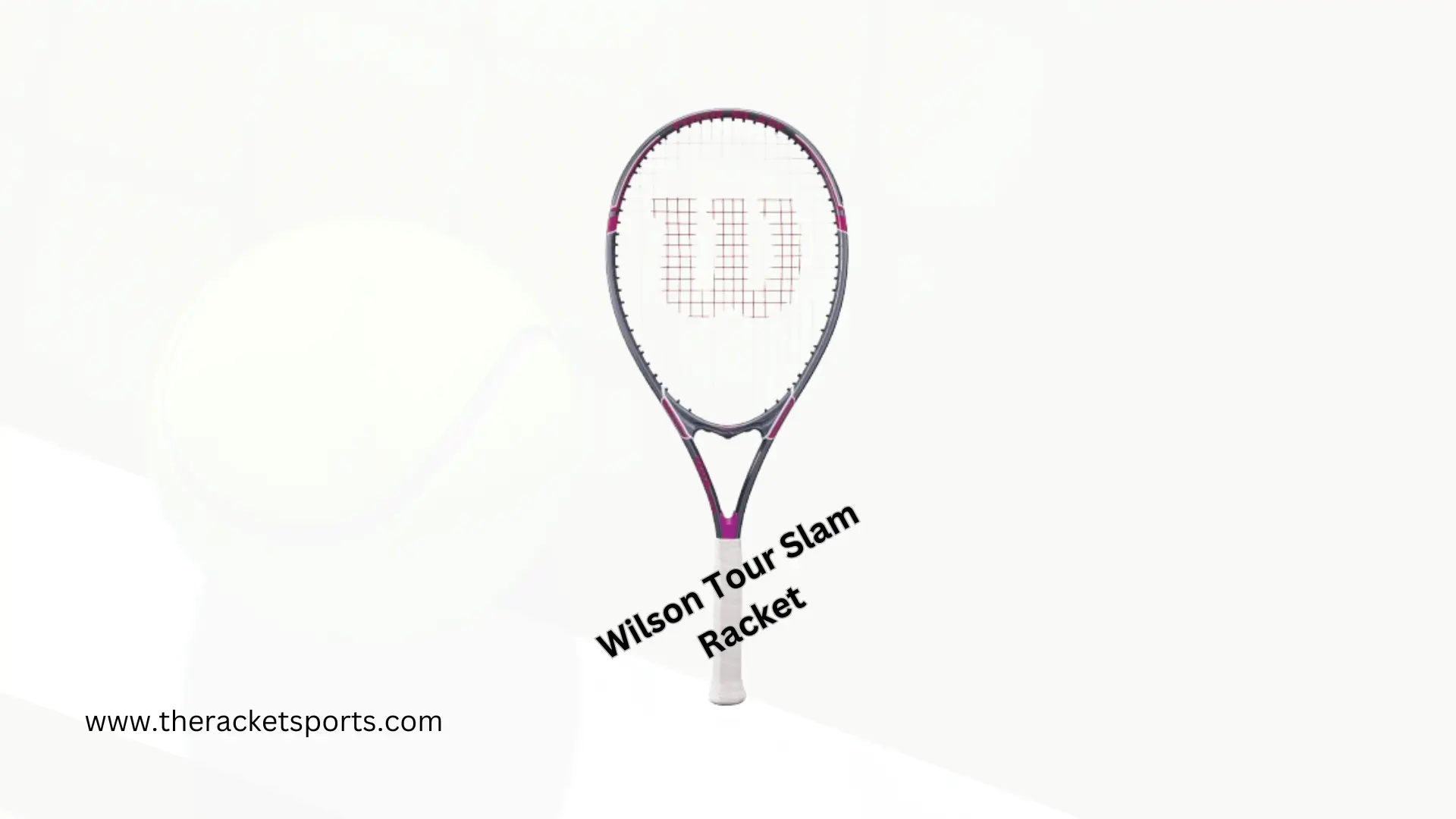
4. Wilson Tour Slam (Best Budget Option)
Tennis can be an expensive sport. If you are just playing casually a few times a year and don't want to spend over $100 on a racket, the Wilson Tour Slam is the perfect cheap alternative.
This racket is made from an aluminum alloy, which keeps the cost extremely low. It has a massive 112-square-inch head size and an extended 27.5-inch length. You get a huge sweet spot and a bit of extra leverage for serving.
I keep a few of these in my coaching bag for walk-in students. They are incredibly easy to use, and they come pre-strung right out of the box.
The Drawback
Because it is made of aluminum instead of graphite, it transmits a lot of vibration into the arm on off-center hits. The factory strings are also very cheap and lose tension quickly. You get exactly what you pay for here.
Key Specs:
- Head Size: 112 sq. in.
- Strung Weight: 290g (10.3 oz)
- Length: 27.5 inches
5. Head Boom Team (Best for Fast Game Improvement)
The Head Boom Team is one of the newest additions to Head's lineup, and it is a fantastic frame for beginners who want to improve rapidly.
The Boom series uses a unique head shape that is slightly wider at the top. This effectively raises the sweet spot higher on the stringbed, which is exactly where most beginners tend to make contact when they are late on the ball.
When I tested the Boom Team, I loved the plush, comfortable feel. It sits right in the middle ground—it isn't as stiff as a Babolat, but it has more pop than a Wilson Clash. At 102 square inches, the head size is slightly smaller than a true oversized racket, making it a perfect transition frame that you won't outgrow for years.
Key Specs:
- Head Size: 102 sq. in.
- Strung Weight: 290g (10.2 oz)
- Length: 27 inches
6. Wilson Hyper Hammer 5.3 (Best for Baseline Power)
The Wilson Hyper Hammer 5.3 is a classic. It has been around for over two decades, and it still sells incredibly well because the design simply works.
The "Hammer" name refers to the balance of the racket. It is extremely head-heavy. Almost all the weight is concentrated at the top of the hoop. This means that even though the racket is very light overall, there is a massive amount of momentum when the racket head comes through the contact zone.
If you have a very slow, compact swing and struggle to get the ball over the net, the Hyper Hammer will do the work for you. Just block the ball, and the heavy head will plow through the shot.
The Drawback
The extreme head-heavy balance makes it terrible for volleying. When you are up at the net, the racket feels sluggish and difficult to maneuver quickly.
Key Specs:
- Head Size: 110 sq. in.
- Strung Weight: 254g (9.0 oz)
- Length: 27.5 inches
7. Babolat Boost Drive (Best for High School Players)
If you are a high school student joining the tennis team, you need a racket that looks and feels like a modern performance frame but is priced for a student budget. The Babolat Boost Drive is exactly that.
It is constructed from 100% graphite, which makes it far superior to cheap aluminum rackets. It has a 105-square-inch head size, which offers a great balance between the massive forgiveness of a 115-inch frame and the precise control of a 100-inch frame.
It swings very fast, making it great for learning topspin mechanics. If you want a frame that plays like a real racket but doesn't cost $250, grab the Boost Drive.
Key Specs:
- Head Size: 105 sq. in.
- Strung Weight: 275g (9.7 oz)
- Length: 27 inches
8. HEAD Graphene XT Radical S (Best for Athletic Beginners)
Not every beginner needs a giant, oversized snowshoe racket. If you play other sports, have good hand-eye coordination, and can consistently track a moving ball, you should skip the oversized frames entirely.
The HEAD Graphene XT Radical S is a 102-square-inch frame that offers much more control than the Ti.S6. It is light enough for a beginner to swing comfortably, but it provides a very crisp, connected feel upon impact.
If you want to learn proper technique from day one and don't want a racket that masks your bad habits with excessive power, the Radical S is a phenomenal starting point. You can read more about how head sizes impact control in our tennis racket stiffness guide.
Key Specs:
- Head Size: 102 sq. in.
- Strung Weight: 295g (10.4 oz)
- Length: 27 inches
The Beginner's Buying Guide: What You Actually Need to Know
Do not get bogged down by marketing terms. When buying your first racket, you only need to look at three specifications: Head Size, Weight, and Grip Size.
1. Head Size (Go Big)
The head size dictates the size of the sweet spot.
- Under 100 sq. in.: Advanced rackets. Do not buy these. You will mishit the ball constantly.
- 100 - 105 sq. in.: Intermediate/Athletic Beginner rackets. A good balance of power and control.
- 106 - 115 sq. in.: Oversized Beginner rackets. These provide massive power and a huge sweet spot. This is where most beginners should start.
2. Weight (Go Light)
Heavy rackets (over 11 ounces) are designed to absorb the impact of a 100 mph incoming shot. As a beginner, you are not facing 100 mph shots. You are hitting slow balls. You need a light racket (between 9.0 and 10.5 ounces) so you can swing it easily and learn proper mechanics without tiring out your shoulder. For more on how weight affects gameplay, you can check the official USTA equipment rules.
3. Grip Size (Measure It)
Playing with the wrong grip size will destroy your elbow. Grip sizes in the US range from 4 1/8 inches to 4 5/8 inches. Most adult women use a 4 1/4 (Size 2) grip. Most adult men use a 4 3/8 (Size 3) grip. If you are unsure, buy a smaller grip. You can always add an overgrip to make a handle thicker, but you cannot make a thick handle smaller.
Frequently Asked Questions
Look for a racket with a large head size (105 to 115 square inches) and a light weight (under 10.5 ounces strung). This combination will give you a large sweet spot and effortless power while you learn the mechanics of the game.
No. Beginners do not swing fast enough to benefit from expensive polyester strings, and stiff strings can actually cause arm injuries. Stick to a basic synthetic gut or multifilament string. Most beginner rackets come prestrung with synthetic gut, which is perfectly fine.
Beginners should always buy a lighter racket. A lighter racket is easier to maneuver and won't fatigue your arm as quickly. Save the heavy rackets for when you become an advanced player and need to absorb the pace of highlevel opponents.
Wilson, Head, and Babolat are the big three brands in tennis. All three make exceptional rackets for every skill level. Do not focus on the brand; focus on the specifications of the specific racket model to ensure it fits your game.